
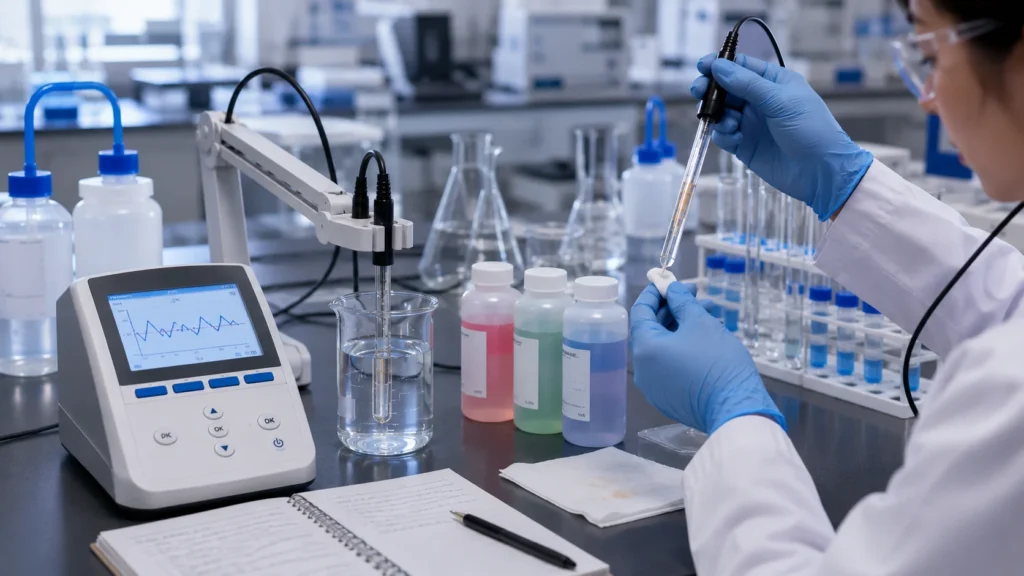
Unexpected pH meter errors can lead to unreliable measurements, failed calibrations, and inconsistent laboratory results. In many cases, the problem isn’t the instrument itself but issues such as electrode contamination, improper calibration, temperature differences, or incorrect handling procedures.
This guide explains the most common laboratory pH meter errors, what causes them, and the practical steps you can take to restore accurate, stable, and repeatable pH measurements.
Before troubleshooting specific pH meter problems, it’s worth understanding what separates a high-quality laboratory instrument from an entry-level model. Features such as measurement stability, calibration capabilities, electrode compatibility, and long-term reliability can significantly influence overall performance. If you’re considering a new instrument for research or quality control applications, explore our guide to the best laboratory pH meters for research and education labs.
Why Is My pH Meter Reading Unstable?
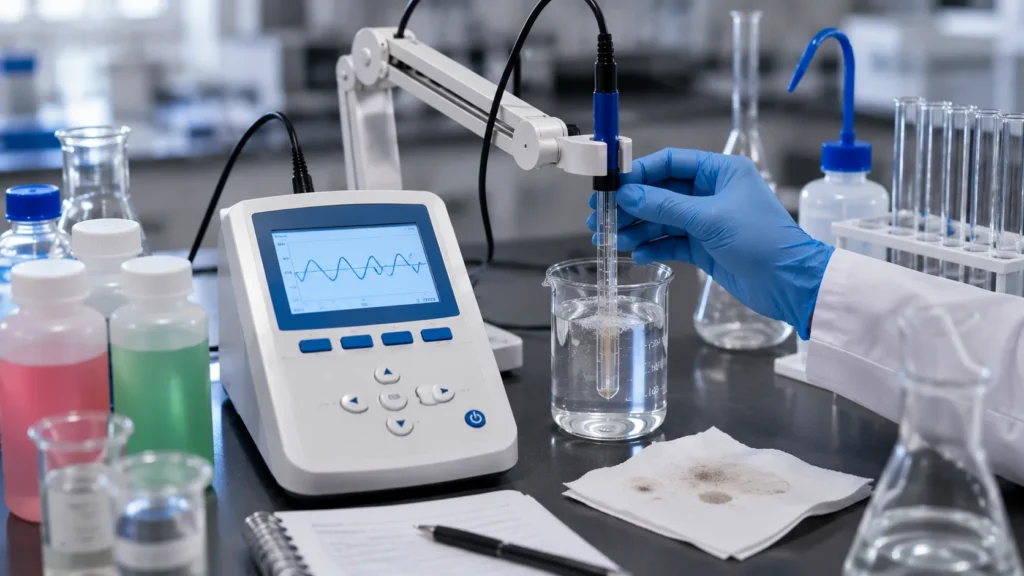
An unstable pH reading is one of the most common problems encountered in laboratory measurements. In most cases, the issue is not caused by the pH meter itself but by the electrode, sample conditions, or calibration process.
Unstable readings may result from a contaminated or aging electrode, insufficient stabilization time, temperature fluctuations, air bubbles trapped around the glass bulb, or buffer solutions that are expired or contaminated. In some cases, improper storage of the electrode can also reduce its response time and measurement stability.
Before assuming the instrument is faulty, inspect the electrode, verify the calibration using fresh certified buffer solutions, and allow the reading to stabilize completely. Most unstable measurements can be resolved by following proper laboratory procedures and routine electrode maintenance.
💡 Best Practice
If a pH reading continues to drift after proper calibration, inspect the electrode before replacing the instrument. In most laboratory cases, the electrode—not the meter—is responsible for unstable measurements.
Why Does My pH Meter Fail to Calibrate?
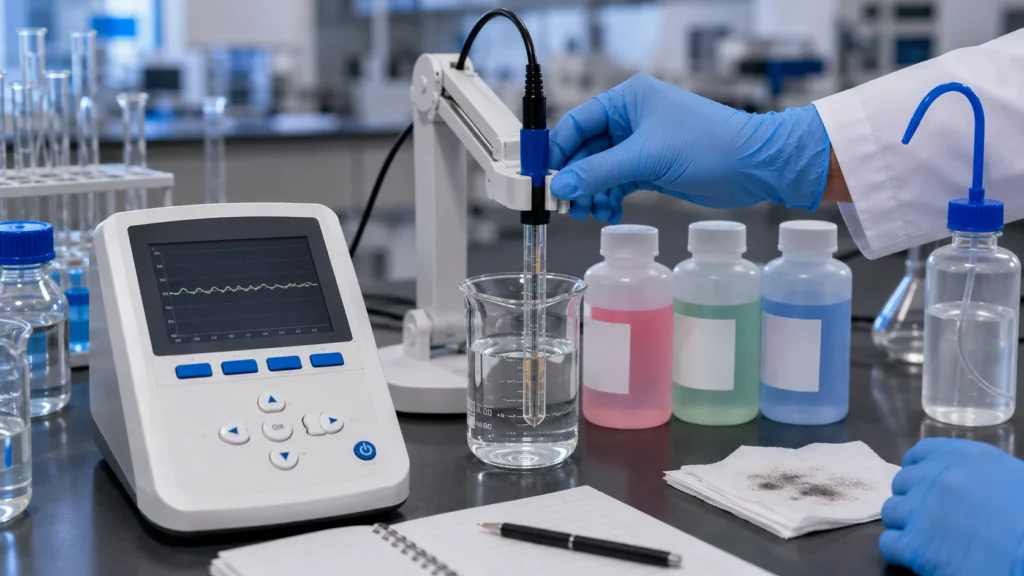
Calibration failures are often caused by electrode condition rather than problems with the pH meter itself. A dirty, dehydrated, damaged, or aging electrode may respond too slowly or fail to recognize certified buffer solutions correctly, preventing successful calibration.
Other common causes include expired or contaminated buffer solutions, incorrect calibration sequence, significant temperature differences between buffers, and insufficient stabilization time before confirming each calibration point.
If calibration repeatedly fails, begin by replacing the buffer solutions with fresh certified standards, cleaning the electrode according to the manufacturer’s recommendations, and verifying that automatic temperature compensation (ATC) is functioning correctly. In many cases, these simple steps restore accurate and reliable calibration without replacing the instrument.
💡 Best Practice
If calibration fails repeatedly with fresh buffer solutions, inspect the electrode before assuming the pH meter is defective. Most calibration failures originate from the electrode rather than the instrument itself.
How Does Electrode Contamination Affect pH Measurements?
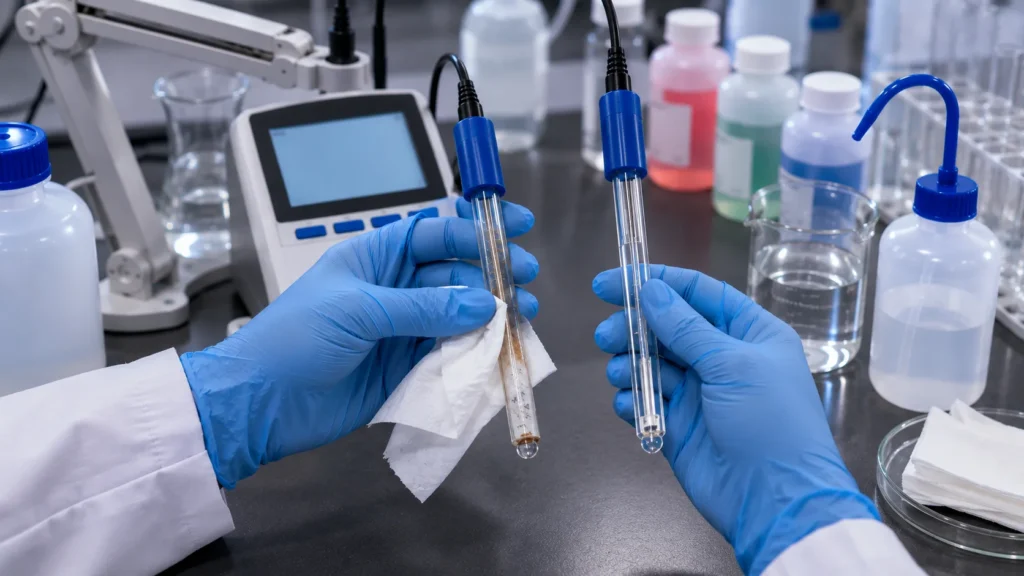
The pH electrode is the most sensitive component of any laboratory pH meter, and even minor contamination can significantly affect measurement accuracy. Residues from previous samples, proteins, oils, salts, or chemical deposits may coat the glass membrane or clog the reference junction, causing slow response times, unstable readings, and calibration failures.
A contaminated electrode often appears to be a meter malfunction, but in most cases the instrument itself is functioning correctly. Cleaning the electrode with the appropriate laboratory cleaning solution and following the manufacturer’s maintenance recommendations can usually restore normal performance.
Regular electrode maintenance not only improves measurement accuracy but also extends electrode lifespan, reduces calibration problems, and ensures reliable results in analytical chemistry, quality control, environmental testing, and research laboratories.
✅ Pro Tip
Never wipe the glass bulb after rinsing. Instead, gently blot the electrode with a lint-free laboratory tissue. Wiping the glass membrane can generate static charges and reduce measurement stability.
Can Temperature Affect pH Meter Accuracy?
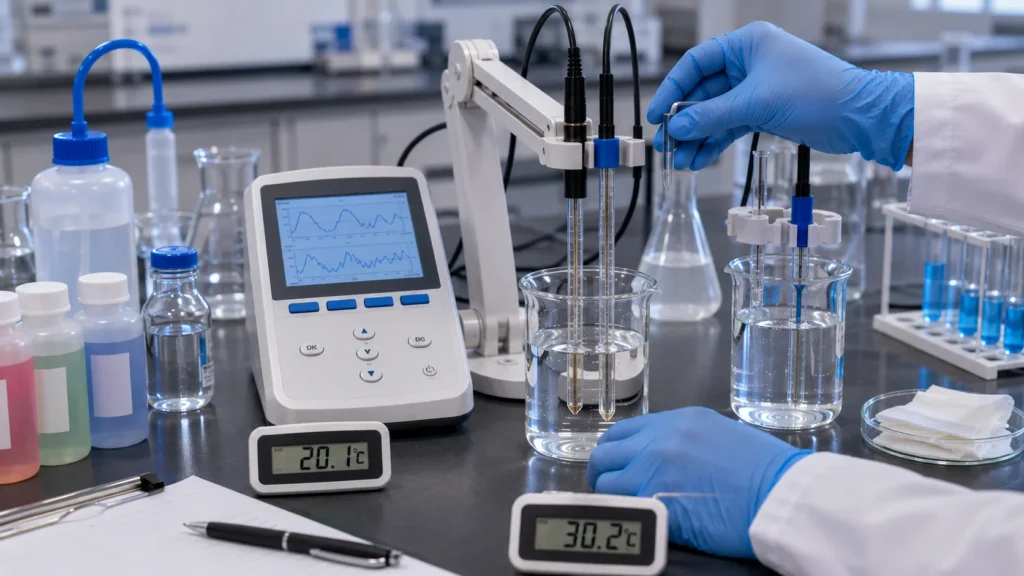
Yes. Temperature can affect both the sample itself and the response of the pH electrode. As temperature changes, the electrical behavior of the glass membrane changes, and the actual pH of many solutions may also shift. This can lead to slower stabilization, inconsistent readings, or unexpected differences between measurements.
Automatic temperature compensation (ATC) adjusts the electrode response based on the measured temperature, but it does not correct every temperature-related change in the sample. For reliable results, calibration buffers and test samples should be allowed to reach a similar temperature before measurement.
Large temperature differences between the electrode, buffer solutions, and samples can reduce calibration quality and increase measurement drift. In high-precision laboratory work, maintaining stable measurement conditions is often just as important as using a properly calibrated instrument.
💡 Best Practice
Allow calibration buffers, samples, and the pH electrode to reach a similar temperature before measurement. This reduces stabilization time and improves measurement consistency.
Why Does My pH Meter Give Different Readings?
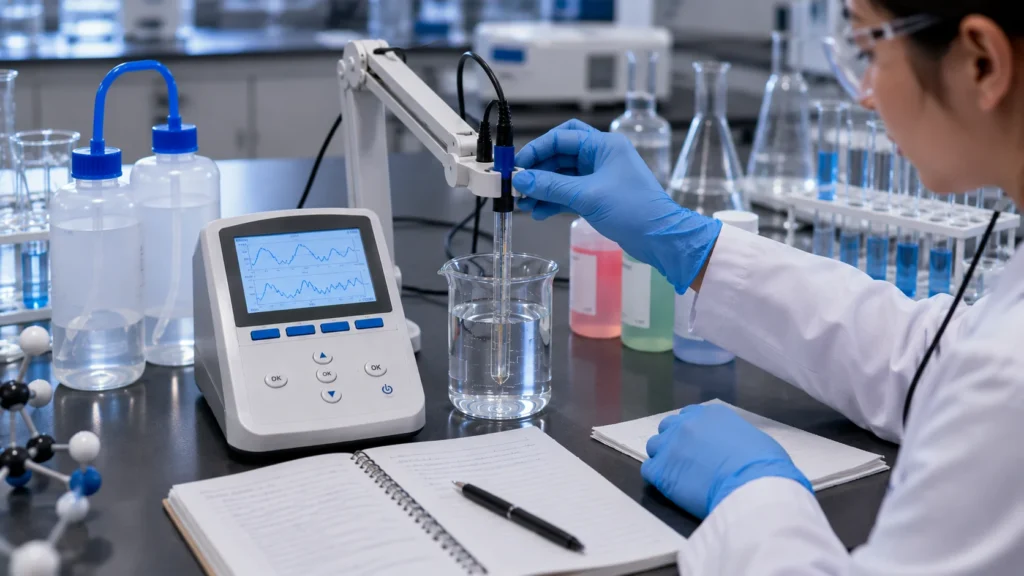
Receiving different pH readings from the same sample can be frustrating, but it is usually caused by measurement conditions rather than a defective instrument. Small variations in temperature, electrode condition, calibration quality, sample mixing, or insufficient stabilization time can all influence the final result.
Inconsistent readings are also common when the electrode has not been properly rinsed between measurements or when samples are measured immediately after stirring. Air bubbles around the glass membrane, contaminated buffer solutions, and aging electrodes may further reduce repeatability.
To improve measurement consistency, calibrate the instrument regularly, use fresh certified buffer solutions, rinse the electrode between samples, and wait until the displayed value becomes completely stable before recording the measurement. Following the same procedure for every sample is one of the simplest ways to achieve accurate and repeatable laboratory results.
✅ Pro Tip
For the best repeatability, measure samples under consistent laboratory conditions using the same electrode, calibration procedure, sample temperature, and stabilization time.
Laboratory pH Meter Troubleshooting Checklist
Most laboratory pH meter problems can be identified quickly by checking a few common factors before replacing the instrument or electrode. Use the troubleshooting checklist below to match the symptoms you observe with their most likely causes and the recommended corrective actions. In many cases, simple maintenance or recalibration is enough to restore accurate and reliable pH measurements.
| Problem | Most Likely Cause | Recommended Solution |
|---|---|---|
| Unstable pH readings | Contaminated or aging electrode | Clean or replace the electrode |
| Calibration failed | Expired or contaminated buffer solutions | Use fresh certified buffer solutions |
| Slow electrode response | Dirty glass membrane or dehydrated electrode | Clean and properly recondition the electrode |
| Different readings from the same sample | Insufficient stabilization or inconsistent technique | Wait for a stable reading and follow the same procedure for every measurement |
| Incorrect pH values | Temperature differences or poor calibration | Allow thermal equilibration and recalibrate the meter |
| Drift during measurement | Dirty reference junction or old electrode | Clean the electrode and verify calibration |
| Frequent recalibration required | Electrode nearing the end of its service life | Inspect and replace the electrode if necessary |
💡 Quick Tip
Most pH meter problems are caused by electrode condition, calibration practices, or buffer quality—not by the meter itself. Always troubleshoot these factors before replacing your instrument.
Final Tips for Preventing Laboratory pH Meter Errors
Preventing pH meter errors is far easier than troubleshooting inaccurate measurements after they occur. Most laboratory measurement problems can be avoided through proper calibration, routine electrode maintenance, fresh certified buffer solutions, stable sample temperatures, and consistent measurement techniques.
Developing a standardized laboratory workflow not only improves accuracy but also increases repeatability, reduces downtime, and extends electrode lifespan. Regular inspection and preventive maintenance are often more effective than replacing equipment after problems appear.
By following the best practices outlined in this guide, laboratories can achieve reliable, stable, and reproducible pH measurements across research, quality control, environmental analysis, and routine testing applications.
🔬 Expert Recommendation
Consistent calibration, proper electrode care, and high-quality buffer solutions will solve most laboratory pH measurement problems long before instrument replacement becomes necessary. Establishing a standard operating procedure (SOP) for pH measurements is one of the most effective ways to improve long-term laboratory accuracy.
🔍 Still Experiencing pH Meter Problems?
If you’ve already:
- ✅ Cleaned the electrode
- ✅ Used fresh certified buffer solutions
- ✅ Completed a proper calibration
- ✅ Verified temperature compensation
…and your laboratory pH meter still produces unstable or inaccurate readings, it may be time to consider upgrading to a more reliable instrument.
🔬 Compare the Best Laboratory pH Meters →
Frequently Asked Questions
Most pH meter errors are caused by contaminated or aging electrodes, expired buffer solutions, improper calibration procedures, or insufficient stabilization time. In many cases, the instrument itself is functioning correctly, and routine maintenance is enough to restore accurate measurements.
Unstable pH readings are commonly caused by dirty electrodes, temperature fluctuations, air bubbles around the glass membrane, contaminated samples, or inadequate stabilization time. Cleaning the electrode and allowing the reading to stabilize usually improves measurement consistency.
Calibration failures are often caused by contaminated electrodes, expired buffer solutions, incorrect calibration procedures, or damaged sensors. Using fresh certified buffers and properly maintaining the electrode can resolve most calibration problems.
Yes. Temperature affects both the sample and the electrode response. Although automatic temperature compensation (ATC) improves measurement accuracy, calibration buffers and samples should still be measured at similar temperatures whenever possible.
Improve measurement accuracy by calibrating regularly, using fresh certified buffer solutions, rinsing the electrode between samples, allowing readings to stabilize, and maintaining the electrode according to the manufacturer’s recommendations.
An electrode may need replacement if it responds slowly, cannot complete calibration, shows unstable readings after cleaning, or has visible physical damage. Aging electrodes gradually lose sensitivity and measurement reliability.
Yes. Residues from previous samples can coat the glass membrane or block the reference junction, resulting in slow response, unstable readings, calibration failures, and inaccurate pH measurements.
In most laboratory situations, replacing the electrode is sufficient. The pH meter itself rarely fails, while electrodes naturally wear over time and require periodic replacement depending on usage and maintenance.