
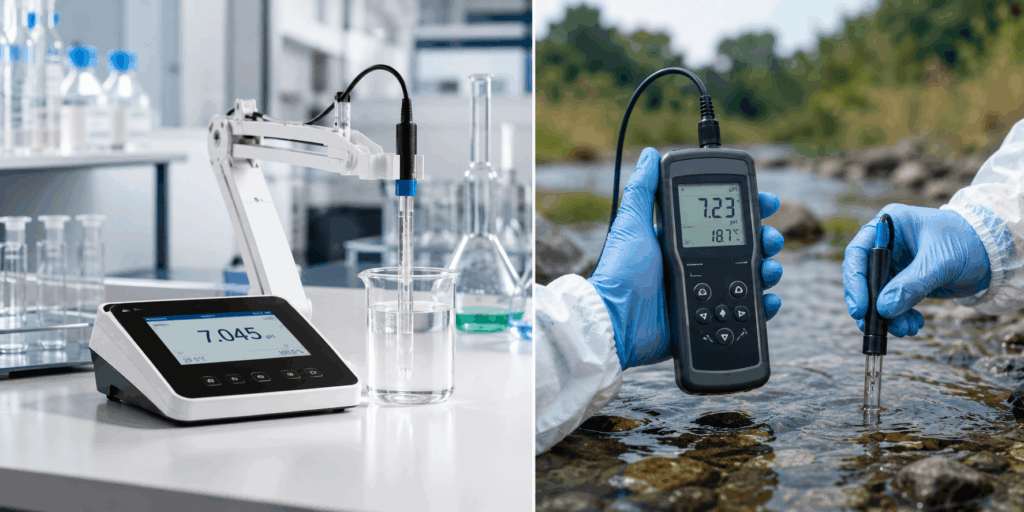
Choosing between a benchtop vs portable pH meter can be challenging because each type is designed for different applications and environments. While both devices measure pH accurately, they are designed for very different environments and workflows.
A benchtop pH meter is typically preferred in research laboratories, university teaching labs, and quality control settings where stability, data management, and long-term measurement consistency are important. Portable pH meters, by contrast, excel in field testing, environmental monitoring, and on-site water analysis where mobility is essential.
In this guide, we compare benchtop and portable pH meters side by side, including accuracy, calibration, durability, data handling, and real-world applications, to help you determine which option best suits your needs.
What Is a Benchtop pH Meter?
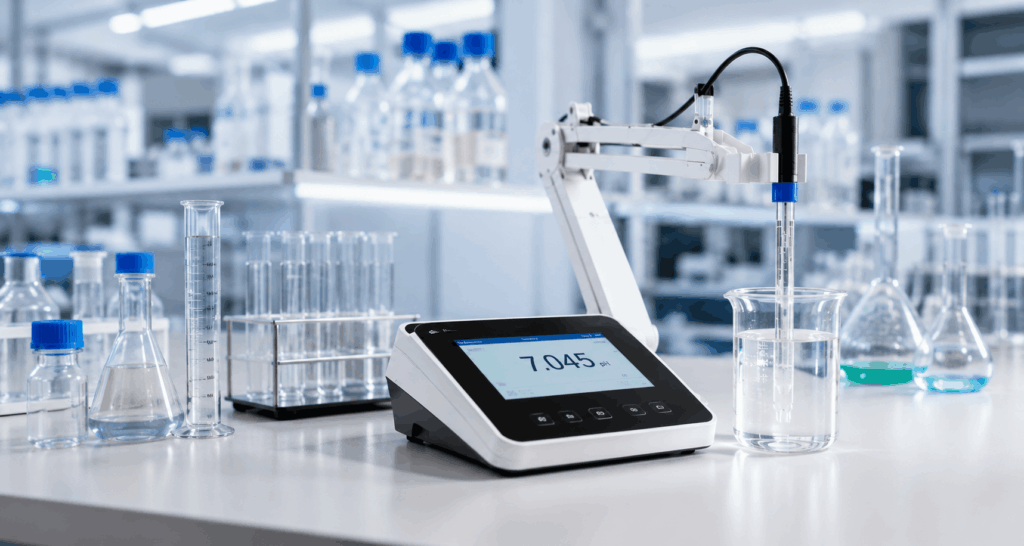
A benchtop pH meter is a laboratory instrument designed for precise and repeatable pH measurements in controlled environments. Unlike portable models, benchtop units are typically installed on laboratory benches and offer larger displays, advanced calibration options, improved data management, and greater long-term stability.
These instruments are commonly used in research laboratories, university teaching labs, quality control facilities, and analytical chemistry applications where measurement consistency is critical. Many benchtop pH meters also support multi-point calibration, automatic temperature compensation (ATC), data logging, and replaceable electrodes.
For applications that require extended measurement sessions, detailed documentation, or the highest level of measurement stability, a benchtop pH meter is often the preferred choice.
Portable pH Meters: When Mobility Matters More Than Bench Stability
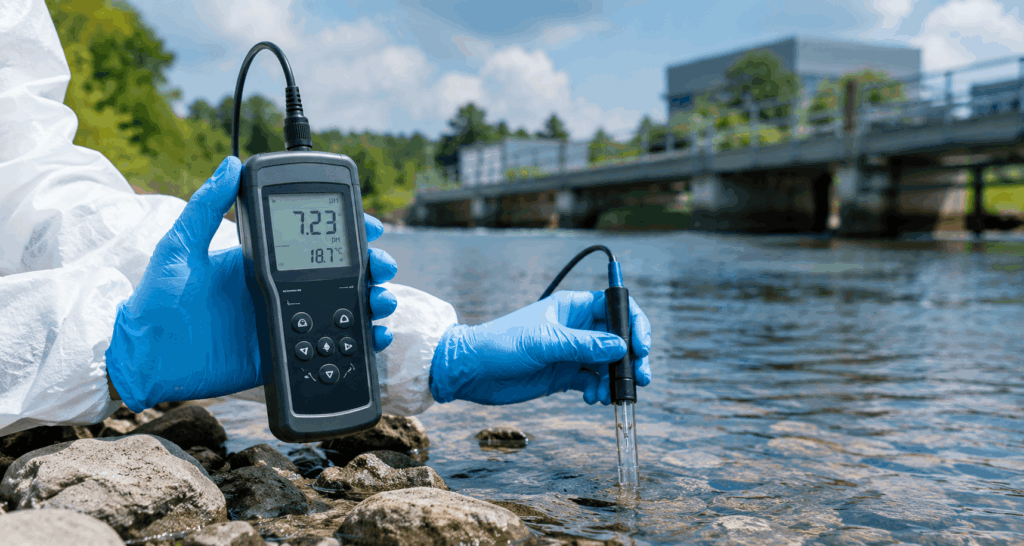
Portable pH meters are designed for situations where measurements need to be taken outside a traditional laboratory environment. Instead of remaining fixed on a laboratory bench, these instruments allow users to perform pH measurements directly at the sampling location, reducing the risk of sample contamination and transportation-related changes.
They are commonly used for environmental monitoring, water quality assessment, agriculture, aquaculture, wastewater analysis, and field research. Most modern portable pH meters include automatic temperature compensation (ATC), multi-point calibration, and battery-powered operation, making them practical for both field testing and routine inspections.
While portable models have become increasingly accurate over the years, they are generally optimized for convenience and mobility rather than long-term measurement stability. For many users, the choice between a portable and benchtop pH meter ultimately comes down to whether portability or laboratory workflow is the higher priority.
Benchtop vs Portable pH Meter: The Differences That Actually Matter
At first glance, benchtop and portable pH meters may appear to offer similar functionality. Both are designed to measure pH accurately and often include features such as automatic temperature compensation (ATC) and multi-point calibration. However, their strengths become much clearer when comparing stability, workflow, portability, data management, and long-term laboratory performance.
| Feature | Benchtop pH Meter | Portable pH Meter |
|---|---|---|
| Accuracy | Typically higher and more consistent | Good for routine measurements |
| Stability | Excellent for long-term measurements | May drift during extended testing |
| Calibration | Advanced multi-point calibration | Usually simpler calibration options |
| Data Logging | Large memory and PC connectivity | Limited storage on most models |
| Power Source | AC powered | Battery powered |
| Portability | Designed for laboratory benches | Designed for field and on-site testing |
| Workflow | Ideal for research and quality control | Ideal for environmental monitoring |
| Best Use Case | Research, education, QC laboratories | Water testing, agriculture, field analysis |
Which pH Meter Is Better for Research Laboratories?
For most research laboratories, a benchtop pH meter is the preferred choice. Research environments often require higher measurement stability, advanced calibration options, long-term data logging, and consistent performance across multiple testing sessions. These are areas where benchtop instruments typically outperform portable models.
In analytical chemistry, electrochemistry, materials science, and university research laboratories, even small variations in pH measurements can affect experimental outcomes. A high-quality benchtop pH meter provides greater measurement confidence, especially when working with sensitive samples or conducting long-duration experiments.
Portable pH meters remain useful for field sampling and preliminary measurements, but when precision, repeatability, and laboratory workflow are the priorities, benchtop systems generally offer a significant advantage.
📖 Recommended Reading
🔬 Best Laboratory pH Meters for Research & Education Labs →
Benchtop vs Portable pH Meter for Research Laboratories
For field testing applications, a portable pH meter is usually the more practical choice. Unlike benchtop systems that require a stable laboratory setup, portable models are designed to operate directly at the sampling location, making them ideal for environmental monitoring, water quality assessment, agriculture, aquaculture, and wastewater analysis.
One of the biggest advantages of a portable pH meter is the ability to measure samples immediately after collection. This helps minimize changes caused by transportation, temperature fluctuations, or sample contamination, resulting in more representative field measurements.
Modern portable pH meters often include automatic temperature compensation (ATC), multi-point calibration, and durable water-resistant housings. While they may not always match the long-term stability of high-end laboratory instruments, they provide the mobility and convenience needed for on-site testing and outdoor research.
Final Verdict
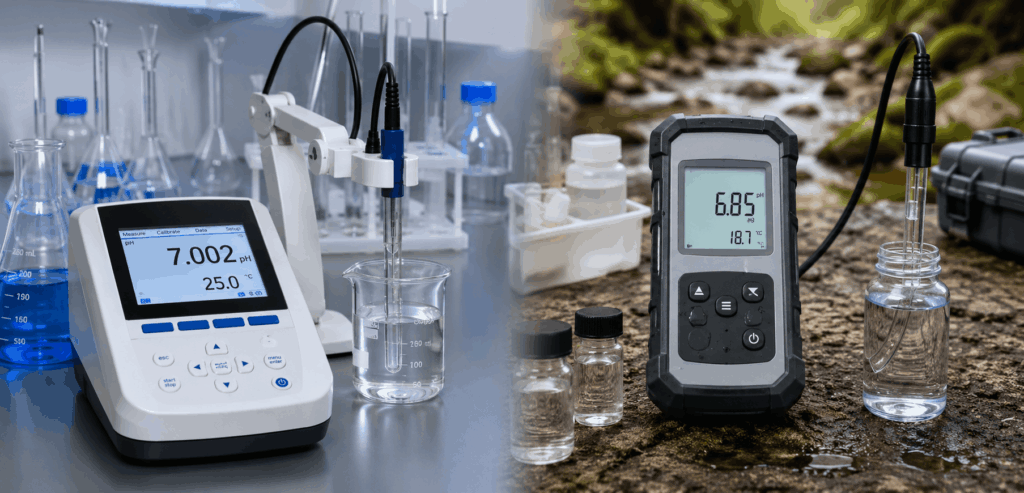
There is no single pH meter that is best for every situation. The right choice depends on where measurements are performed and what level of stability, documentation, and convenience your workflow requires.
For research laboratories, university teaching labs, and quality control environments, a benchtop pH meter is generally the better investment. Its superior stability, advanced calibration features, and laboratory-focused design make it the preferred option for routine analytical work.
For environmental monitoring, water quality testing, agriculture, and other field applications, a portable pH meter offers greater flexibility and convenience. The ability to perform measurements directly at the sampling location often outweighs the benefits of a fixed laboratory setup.
In short, choose a benchtop pH meter when accuracy and long-term stability are the priority, and choose a portable pH meter when mobility and on-site testing are essential.
Frequently Asked Questions
In most cases, yes. Benchtop pH meters are designed for controlled laboratory environments and typically offer better measurement stability, advanced calibration features, and improved signal processing. However, proper calibration and electrode quality remain just as important as the meter itself.
Yes. Portable pH meters can be used in laboratories for routine measurements and educational purposes. However, research laboratories and quality control facilities often prefer benchtop systems because of their greater stability, data logging capabilities, and long-term measurement consistency.
Portable pH meters are usually the preferred choice for water quality testing because they allow measurements to be performed directly at the sampling location. This helps reduce sample contamination and minimizes changes that may occur during transportation.
A benchtop pH meter is the better option when accuracy, stability, detailed calibration, and data management are important. They are commonly used in research laboratories, analytical chemistry applications, and quality control environments.
Yes. Portable pH meters should be calibrated regularly using standard buffer solutions to maintain measurement accuracy. The calibration frequency depends on usage, sample type, and the level of precision required.
The biggest advantage of a portable pH meter is mobility. Portable models allow users to perform pH measurements directly in the field, making them ideal for environmental monitoring, agriculture, aquaculture, and on-site water testing.