
Introduction
Finding the right laboratory centrifuge can be a challenge for researchers. There are various models. For example, for clinical work, choosing a benchtop centrifuge can be useful. Furthermore, for teaching labs and sensitive biological samples, buying mini centrifuges and refrigerated centrifuges is recommended. choosing the best model related to some key factors like speed (RPM/RCF), capacity, rotor type, and safety features.
In this article, I tried to compare and review the best laboratory centrifuges in 2025 based on my observation. I have reviewed and compared trusted brands and models such as Eppendorf, OHAUS, Labnet ,and Benchmark. You’ll be able to discover which model is suitable for your laboratory needs, medical labs, research facilities, classrooms, and students.
This guide will help you decide with confidence to look for an affordable centrifuge, a high-speed microcentrifuge for DNA/RNA extraction, or a premium refrigerated centrifuge for advanced experiments. Join me as we take a closer look at five of the best centrifuges.
Further Reading: If you’re interested in precision measurement tools, check out our previous article on Best Affordable Digital Power Analyzers for Labs.
Top 4 Laboratory Centrifuges in 2025
In this part of the article, I will introduce four different types of centrifuges that are the best for laboratories. Related to your requirements, you can choose the best laboratory centrifuge for research labs.
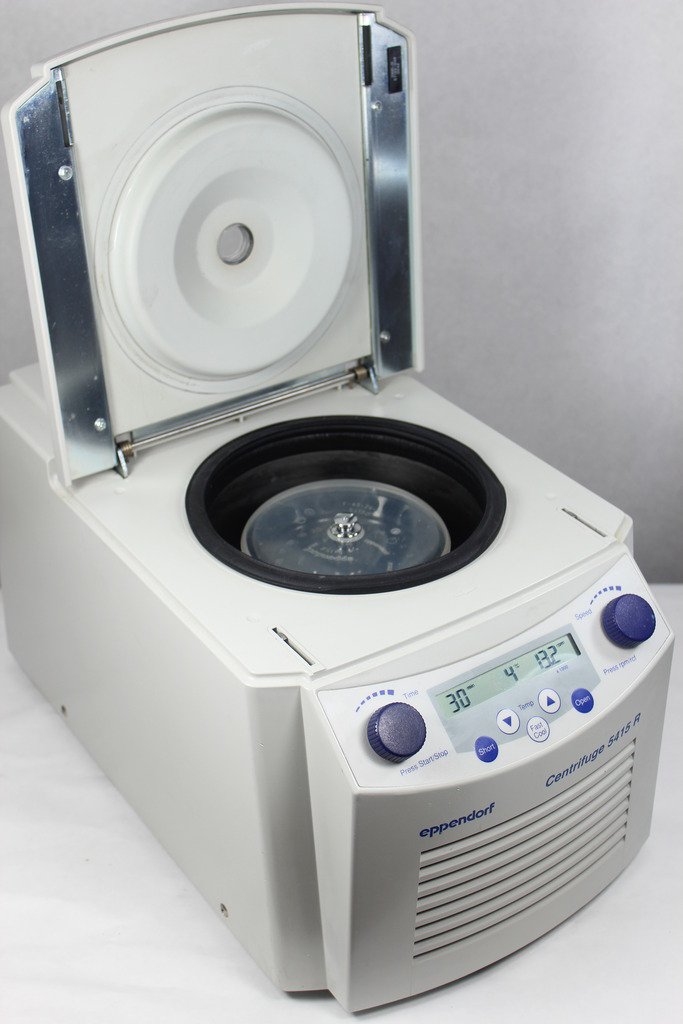
Eppendorf 5415R Refrigerated Centrifuge
The Eppendorf 5415R is a compact refrigerated microcentrifuge designed for labs that need reliable performance with minimal space and noise. Ideal for molecular biology, clinical, and teaching labs, it offers precise temperature control, high-speed capability, and user-friendly operation. Its small footprint and whisper-quiet OptiBowl design make it perfect for bench-top use without disturbing the work environment.
Key Features & Specifications
- Maximum speed: 13,200 rpm (16,100 × g)
- Rotor capacity: 24 × 1.5/2.0 mL tubes
- Temperature range: 0°C to 40°C; maintains 4°C even at maximum speed
- Design: Compact footprint, ergonomic low-profile rotor for easy loading/unloading
- Operation: Digital display of time and speed, Short Spin button for quick spins
- Cooling: FastTemp function for rapid precooling, standby cooling maintains chamber temperature
- Noise level: Whisper-quiet operation, even without rotor lid
- Safety & Convenience: Soft-touch one-finger lid closure, no exposed sharp edges
Pros
- Maintains precise 4°C even at full speed
- High maximum speed for a microcentrifuge
- Compact and quiet, ideal for shared labs or teaching environments
- FastTemp function quickly reaches desired temperature
- Easy-to-use digital controls for time and speed
Cons
- Limited rotor capacity (24 × 1.5/2.0 mL) for larger sample volumes
- Price is higher compared to non-refrigerated microcentrifuges
Bottom Line
The Eppendorf 5415R is a top choice for labs needing a reliable, compact refrigerated microcentrifuge. Its high speed, precise temperature control, and quiet operation make it perfect for sensitive samples and frequent use, while the ergonomic design ensures easy operation and consistent results.
🔴 🔗 Price: Approximately $2,998.95 (Check current prices on Amazon)
Ohaus FC5706 Frontier 5000 Series Multi-Function Centrifuge
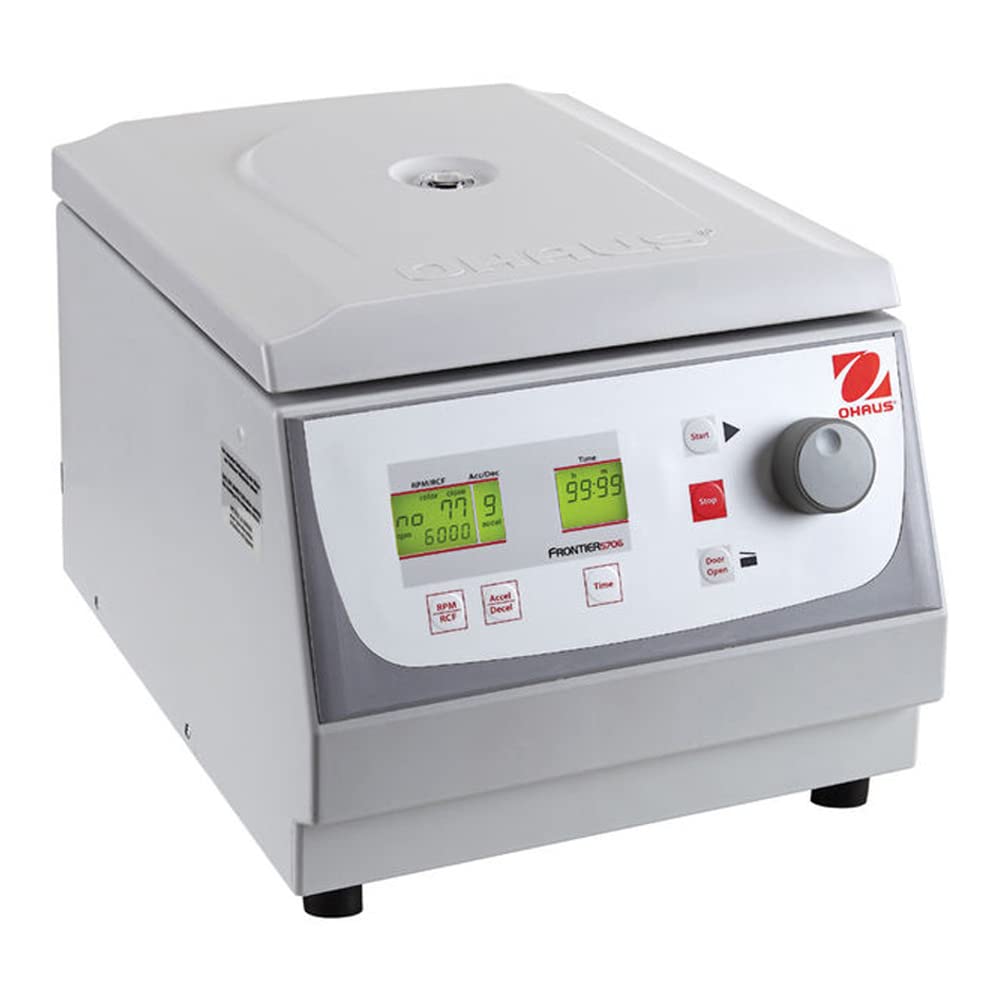
When I worked with the Ohaus FC5706 in our teaching lab, what stood out right away was how easy it was to set up and use. Unlike some centrifuges that feel intimidating with too many buttons, this one has a simple backlit LCD with just two lines of display. Even as a student, I could quickly adjust the settings without asking for help.
The brushless motor is another big advantage. It runs quietly and requires almost no maintenance. During long lab sessions, I appreciated that I could focus on my work without being distracted by loud vibrations or fan noise. Its small footprint also made it really convenient in a crowded lab space where every inch of bench area matters.
One thing I noticed is that it’s a multi-function centrifuge. We used it for a variety of tasks. From basic sample separation to more routine lab prep work. It wasn’t just limited to one type of experiment, which made it flexible for both teaching and research purposes.
Pros:
- traightforward LCD controls — very student-friendly.
- Quiet, reliable brushless motor with low maintenance.
- Compact footprint, ideal for crowded benches.
- Versatile for general lab work and teaching labs.
Cons:
- Limited display detail compared to premium models.
- No refrigeration option for sensitive samples.
- Moderate capacity — not the best for very high-volume labs.
🔴🔗 Price: Approximately $1,710.16 (Check current prices on Amazon)
Prism-R C2500-R Refrigerated Microcentrifuge Review
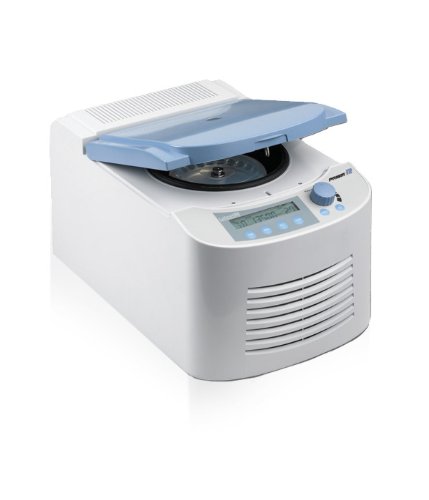
During my time in the molecular biology lab, which I had worked in with my friend, the Prism-R C2500-R Refrigerated Microcentrifuge quickly became one of the most dependable tools on my bench. At first, I was impressed by how compact it was compared to other refrigerated centrifuges I had seen. Despite its small footprint, it delivered high speed (up to 13,500 rpm) and g-force (17,135 × g) without breaking a sweat.
The digital LCD control panel is very intuitive. As a student still getting used to advanced lab instruments, I appreciated being able to easily toggle between rpm and g-force settings. The display also allowed me to set precise run times (from half a minute up to 99 minutes) and monitor the chamber temperature in real-time.
The cooling system was another standout. Reaching 4 °C from room temperature in under 8 minutes meant I didn’t have to wait around before spinning sensitive samples. Even after long runs, the machine stayed quiet and vibration-free, thanks to its solid design and imbalance detection system. That gave me confidence that my samples—and the centrifuge itself—were safe.
The 24-place rotor design was also practical. It allowed me to load multiple 1.5/2.0 mL tubes at once, with enough spacing for easy access. When I needed to run PCR strips, the optional Strip Spin™ adapter made switching formats simple. Cleaning was also painless since the rotor could be removed and autoclaved.
Pros
- Powerful performance — up to 13,500 rpm or 17,135 × g.
- Fast refrigeration — reaches 4 °C in less than 8 minutes.
- Quiet operation — stable runs with minimal vibration.
- User-friendly LCD controls — simple for students and lab staff.
- Versatile rotor design — supports both tubes and PCR strips.
Cons
- High price point (~$5,500), which may be steep for teaching labs.
- 230V requirement could limit use in certain regions without adapters.
- Adapters for smaller tubes sold separately, adding extra cost.
The 230V requirement could limit use in certain regions without adapters (see our guide on Best DC Power Supplies for Students and Physics Labs)
🔴🔗 Price: Approximately $1,436.78 (Check current prices on Amazon)
Benchmark Scientific C1612 MC-12 HS Microcentrifuge — Hands-On Lab Experience
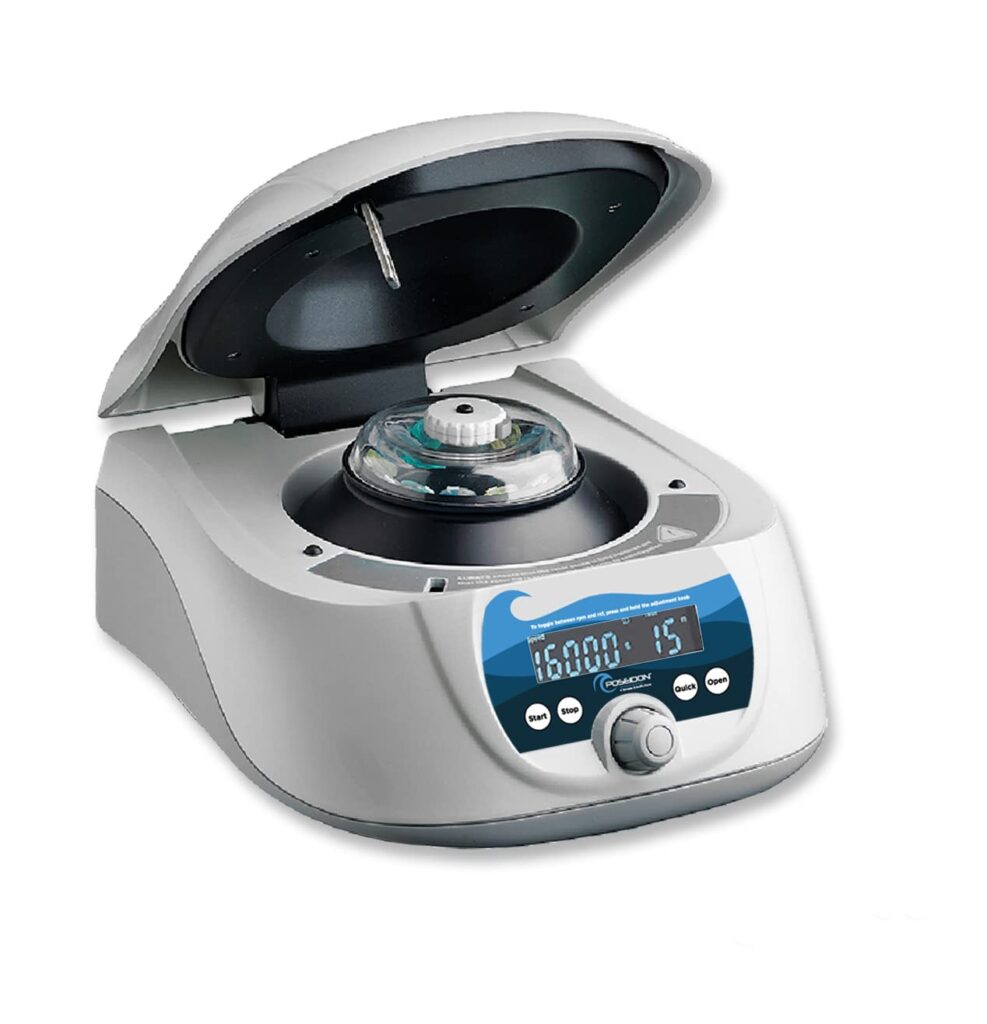
To complete my research article on compact centrifuges, I visited a nearby molecular biology lab that had the Benchmark Scientific C1612 MC-12 HS Microcentrifuge. Since this model is often cited as the first compact centrifuge to achieve 16,000 × g, I wanted to see how it actually performed in a working environment.
When I first placed it on the bench, its small footprint (less than 9 inches wide) stood out. The size makes it easy to fit onto a crowded workstation, which is exactly what students and busy labs need. Despite being compact, the centrifuge had a solid build and a surprisingly quiet operation.
During testing, the brushless motor drive impressed me. It accelerated quickly, and the rotor reached high g-forces without any instability. One feature I noticed right away was the quick deceleration—runs ended smoothly but efficiently, without disturbing the samples.
The 12-place rotor capacity may not match larger refrigerated centrifuges, but for personal use and DNA/RNA work, it was more than enough. The fact that it can reach the critical threshold of 16,000 × g made it suitable for a wide range of molecular biology protocols, including those involving nucleic acid purification.
Overall, using the MC-12 in a real lab setting helped me understand why many researchers prefer it as a personal benchtop centrifuge—powerful enough for advanced work, yet small and simple enough for routine use.
Pros
- High performance in a compact size — less than 9 inches wide.
- Capable of 16,000 × g, meeting molecular biology standards.
- Maintenance-free brushless drive, reliable for long-term use.
- Quick deceleration without disrupting samples.
- Ideal as a personal centrifuge for individual workstations.
Cons
- 12-tube capacity may be limiting for larger experiments.
- No refrigeration, not suitable for temperature-sensitive samples.
- Single voltage option (115V) could be restrictive in some regions.
🔴🔗 Price: Approximately $1,436.78 (Check current prices on Amazon)
Conclusion
Find the best laboratory centrifuge corresponding to your purpose. For teaching labs and classrooms, affordable mini centrifuges are the best choice. If you need higher speed and flexibility, benchtop models like OHAUS and Labnet provide an excellent balance between performance and price. For advanced research, particularly with temperature-sensitive samples, premium refrigerated centrifuges are suitable. Models such as the Eppendorf 5415R and Prism-R C2500-R stand out for their cooling efficiency and reliable operation.
Each centrifuge I reviewed has its own features. Features like quiet operation, versatile rotor design, or easy-to-use digital controls. By considering key factors such as speed (RPM/RCF), rotor compatibility, cooling options, and budget, you can confidently select the model that fits your lab’s needs.
If you’re setting up a new lab, don’t forget to also explore our related guides on Top 3D Printers for Educational Labs in 2025 to complete your essential equipment list.
Ready to Choose Your Laboratory Centrifuge?
Whether you’re equipping a research lab, setting up a teaching facility, or handling sensitive biological samples, selecting the right centrifuge will improve your workflow and ensure reliable results.
👉 Check out the latest prices and availability on Amazon and pick the one that best fits your needs:
🔴 Eppendorf 5415R Refrigerated Centrifuge — [Check current prices on Amazon]
🟢 OHAUS FC5706 Frontier 5000 Series Centrifuge — [Check current prices on Amazon]
🔵 Prism-R C2500-R Refrigerated Microcentrifuge — [Check current prices on Amazon]
🟡 Benchmark Scientific C1612 MC-12 HS Microcentrifuge — [Check current prices on Amazon]
⚡ Don’t wait—equip your lab with a centrifuge that combines performance, safety, and reliability today.
Further reading: If you’re interested in related lab equipment, don’t miss our guide on the Best Vacuum Pumps for Laboratories in 2025 .