
If you’re setting up a microbiology or chemistry lab, you already know that sterilization tools aren’t optional — they’re essential. The problem is that open flames are risky, alcohol burners are messy, and both are outdated. That’s where the lab infrared sterilizer comes in: a compact, flame-free solution that sterilizes loops and tools in seconds while keeping your workspace safe and clean.
In 2025, more research and teaching labs are switching to infrared sterilizers for one simple reason — they’re faster, safer, and built to last. Whether you’re replacing your old Bunsen setup or upgrading to a modern system, the right IR sterilizer can save time, improve consistency, and make your lab workflow far smoother.
Below, we’ve reviewed the top-rated infrared sterilizers for laboratory use, comparing their heat-up time, temperature range, durability, and user safety — so you can pick the one that best fits your lab and your budget.
For a broader overview of lab tools, check our complete guide to Essential Laboratory Equipment for Physics & Chemistry Labs (2025 Guide).
Affiliate Disclosure: As an Amazon Associate, SmartTechReview earns from qualifying purchases. Our recommendations are based on independent analysis and verified lab results — not sponsorships.
Quick Comparison of the Top Models (2025)
Looking to decide fast without wading through look-alike models? Below is a clean comparison of three distinct lab infrared sterilizers—each representing a different tier (Budget / Value / Premium). Specs are distilled for real buying decisions: heat-up behavior, peak temperature, port size, safety/anaerobic use, and what each model is best for.
Tip: Pick the behavior you need (instant vs. preheated), then match temperature and port size to your workflow.
| Model | Port Size / Zone | Heat / Speed | Key Features | Best For | Approx. Price |
|---|---|---|---|---|---|
| JOANLAB Infrared Sterilizer (110V) | Standard heating hole | 825°C peak, 5–7 s sterilization (after warm-up) | Stainless-steel body, 95% porcelain element, compact | Teaching labs & routine microbiology | $169.00 |
| DS900 Dual-Temp IR Sterilizer | Dual ports 14 mm / 35 mm | 400°C preheat / 825°C → ~5 s sterilization | Dual temperature mode, 99.9% alumina core, cool-touch shell | Research & clinical labs | $119.00 |
| Open-Use 1300°C IR Sterilizer (Auto Sensor) | 100 mm zone, max Ø 15 mm tools | 1300°C in ~1 s, no preheating, auto 7 s cycle | Auto IR sensor, quartz tube, flame-free, O₂-safe | High-throughput advanced labs | $399.99 |
For safe long-term sample storage, see our guide to Best Ultra-Low Temperature Freezers for Research & Clinical Labs (2025 Guide).
Detailed Breakdown of the Top Models
Before diving into the individual picks, here’s a closer look at how each sterilizer performs in real lab conditions and what makes them stand out from one another.
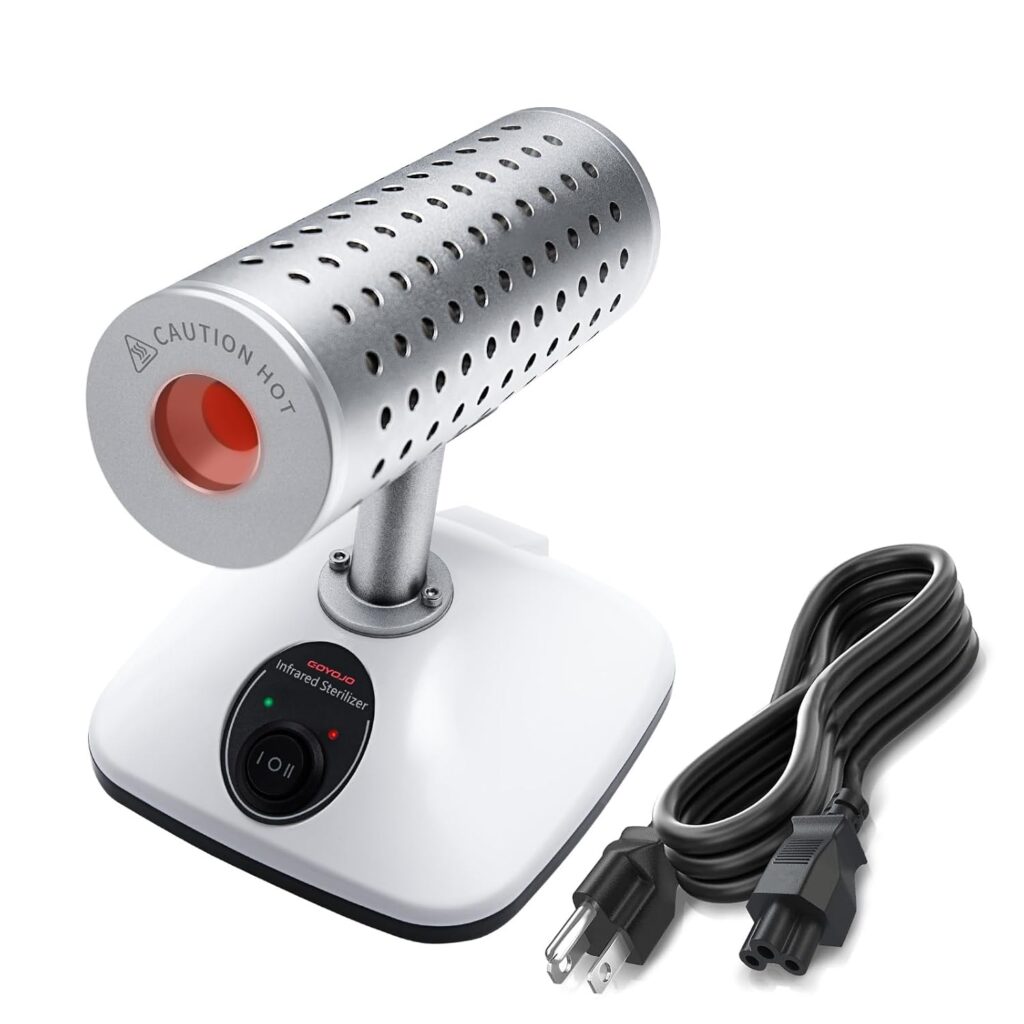
1. Lab Infrared Sterilizer DS900 — Dual Temperature, High-Precision Model
The Lab Infrared Sterilizer DS900 is designed for researchers and educators who need a flame-free yet powerful sterilization tool. Its dual temperature system (400°C / 825°C) allows precise control for various lab applications—from gentle glassware warming to rapid 5-second spore destruction. With 240W heating power and ±25°C precision, it outperforms most mid-range IR sterilizers in both speed and consistency.
Pros
- Dual temperature control (400°C & 825°C) for both preheating and full sterilization
- High 240W power with ±25°C temperature accuracy
- Operates safely in oxygen-free environments (CO₂ or anaerobic chambers)
- Aerospace-grade 99.9% alumina ceramic core for extreme durability
- 304 stainless-steel housing stays cool to the touch even after long use
- Dual 14mm/35mm ports fit most lab instruments (loops, scalpels, needles)
- Global compatibility (110V/220V auto switch, CE & ETL certified)
Cons
- Slightly higher power consumption than single-core models
- No digital display (manual temperature toggle only)
- Slight learning curve for dual-port adjustment
Best For
- Professional research labs needing both anaerobic operation and high precision
- Clinical and mycology labs where dual heat levels improve workflow efficiency
- Universities & teaching environments seeking a long-lasting, low-maintenance sterilizer
🔴🔗 Price: (Check current prices on Amazon)
If you’re comparing multiple lab instruments, you may also find our review of the Digital Hotplate Magnetic Stirrers Compared: 5 Best Models
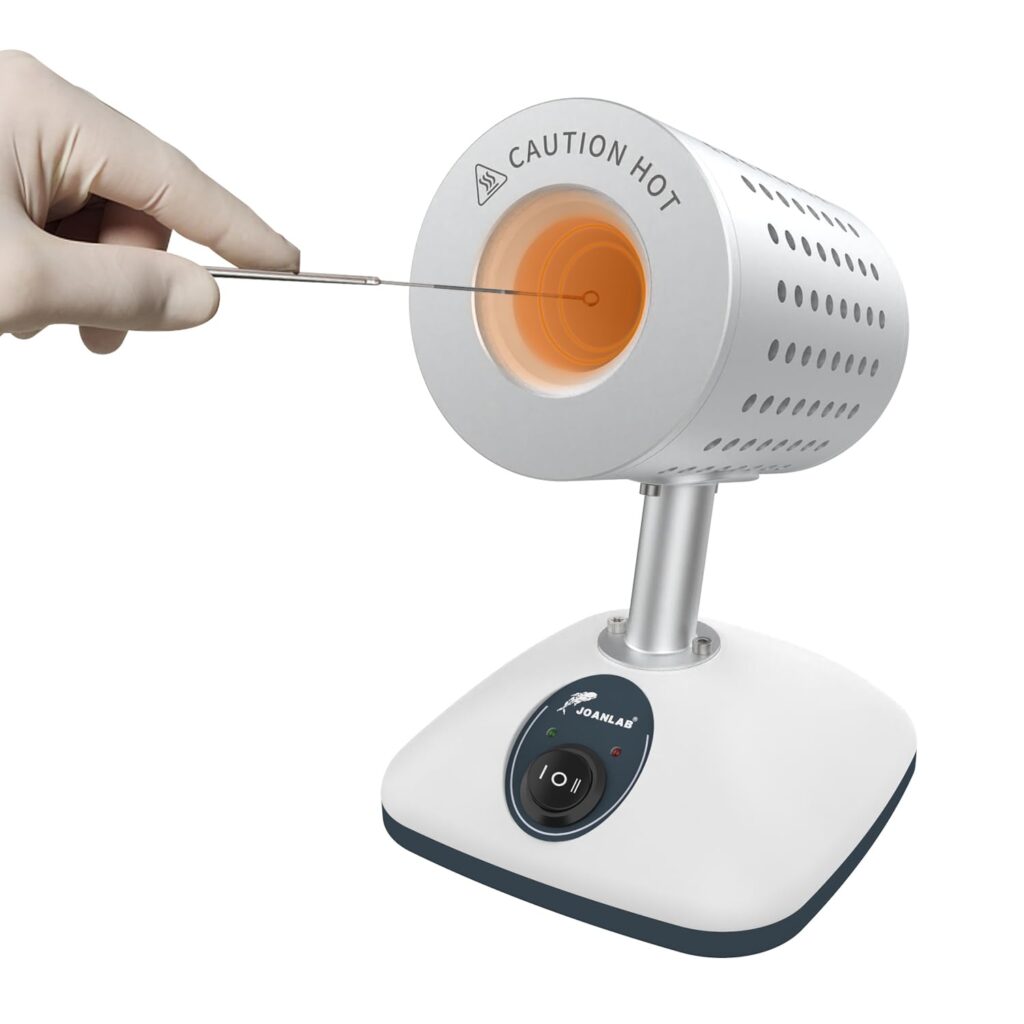
2. JOANLAB Lab Infrared Scalpel Sterilizer – Reliable, Compact & Affordable
Overview
The JOANLAB Infrared Sterilizer is a practical and compact sterilization tool ideal for microbiology, teaching, and routine laboratory work. It reaches an internal temperature of 825°C, allowing quick and thorough sterilization of inoculating loops, glass tubes, needles, and small metal tools in just 5–7 seconds. Its stainless-steel housing provides corrosion resistance and easy cleaning, while the 95% porcelain heating element ensures stable performance over long-term use. Despite its small footprint, it’s powerful enough for continuous operation and perfectly safe for anaerobic environments.
Pros
- Rapid sterilization (825°C in 5–7 seconds)
- Compact, lightweight, and easy to operate
- Stainless-steel body resists corrosion and heat damage
- Works effectively inside anaerobic chambers
- Ideal for daily use in educational and clinical settings
- One-year manufacturer warranty and reliable after-sales support
Cons
- Fixed single temperature (no dual-mode flexibility)
- 95% porcelain element (less durable than high-purity alumina)
- No auto shut-off or timer function
Best for
- Educational and teaching labs needing compact, easy-to-use equipment
- Routine microbiology or diagnostic labs performing frequent sterilizations
- Budget-conscious users who want reliability without extra complexity
🔴🔗 Price: (Check current prices on Amazon)
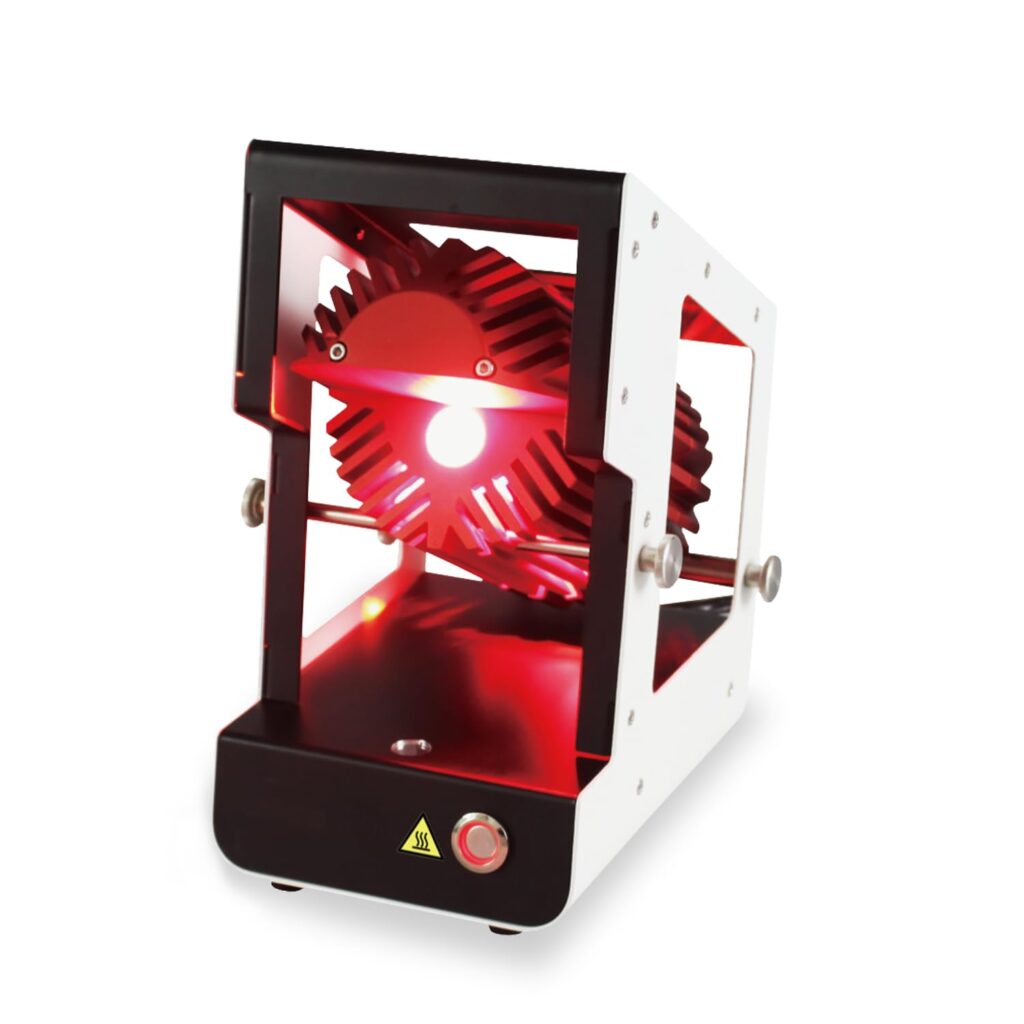
3. Lab Infrared Sterilizer (Open-Use Model) – Instant 1300°C Sterilization with Auto Sensor
This open-use lab infrared sterilizer is one of the most advanced flame-free sterilization systems available today. Unlike traditional resistance-heating sterilizers that require long preheating times, this model uses light energy focusing technology to reach an incredible 1300°C in just one second — instantly ready for sterilization. It’s designed for busy research and clinical labs where time and safety matter most. Equipped with infrared induction sensors, it automatically starts when a loop or needle is inserted and stops after seven seconds, preventing unnecessary energy use and minimizing cross-contamination from touch. The quartz glass heating tube delivers high corrosion resistance and a long service life, while its room-temperature housing and frame protection ensure safe handling even during extended operation.
Pros
- No preheating — reaches 1300°C instantly (saves 15–20 minutes per session)
- Automatic start/stop via infrared sensor — hands-free operation
- Extremely fast 7-second sterilization cycle
- Safe for anaerobic environments, no open flame or oxygen consumption
- Quartz glass heating tube resists corrosion and thermal fatigue
- Compact, professional-grade build suitable for GMP labs
Cons
- Higher price point compared to mid-range models
- Quartz tube may need careful handling to prevent cracking
- Slightly limited port size (max Ø15 mm)
Best for
- High-throughput research and clinical labs needing instant sterilization cycles
- Advanced microbiology and biotech facilities focused on contamination control
- Laboratories with strict safety regulations or anaerobic conditions
🔴🔗 Price: (Check current prices on Amazon)
Buying Guide: What to Look for in a Lab Sterilizer
Choosing a sterilizer for laboratory work really comes down to understanding how your team uses it day-to-day. Some labs prioritize speed because tools are constantly in rotation, while others need temperature consistency or safe operation inside anaerobic environments. The right model is the one that matches your workflow, not necessarily the most expensive one.
Sterilization temperature is one of the first things to check. Higher temperatures mean faster destruction of spores and microorganisms, but they also affect which tools can be heated safely. If your lab frequently sterilizes thick metal instruments or scalpels, a stronger heating system will make a noticeable difference.
Heating behavior also matters. Some models require warm-up time before they’re ready, which is fine for slower-paced labs. Others heat instantly and are ideal for high-throughput work where every few seconds count. Consider the flow of your lab and how often tools are sterilized.
Finally, build quality and safety shouldn’t be overlooked. A solid housing, a reliable heating core, and safe flame-free operation will ensure the unit performs consistently over long periods. If your lab works with sensitive materials or operates in low-oxygen environments, make sure the sterilizer is rated for those conditions.
If your lab also uses bench-top instruments, our guide to the best DC power supplies for research labs can help you choose a reliable unit.
Conclusion
Finding the right lab infrared sterilizer depends on how you balance heating speed, temperature stability, workflow demands, and safety requirements. Each of the three models reviewed here delivers reliable flame-free sterilization within its own category—from compact teaching units to advanced, sensor-driven systems built for high-throughput labs.
If you want a simple, reliable option for routine lab work, the JOANLAB Infrared Sterilizer offers fast 825 °C heating, a compact footprint, and dependable performance for day-to-day sterilization tasks.
For labs that need more flexibility and tighter temperature control, the DS900 Dual-Temp IR Sterilizer provides both 400 °C warming and 825 °C rapid sterilization, making it ideal for microbiology teaching labs, clinical work, and general research.
And for teams that need instant, hands-free sterilization, the1300 °C Open-Use Infrared Sterilizer delivers true one-second heat-up with automatic infrared sensing—perfect for high-volume workflows and anaerobic environments where speed and safety matter most.
No matter your lab type—academic, industrial, microbiological, or clinical—one of these sterilizers will fit your workflow and help streamline daily sterilization without the risks of open flames.
If your lab also relies on custom fixtures or tool holders, you may find our guide to the best 3D printers for laboratory Top 3D printers for laboratory use helpful for creating precise, durable components in-house.