
Best affordable analytical balances now offer true 0.1 mg precision without the premium price tag. For university laboratories, teaching labs, and small research facilities, finding a reliable analytical balance is entirely possible — if you know what specifications actually matter.
In this 2026 budget buying guide, we compare the best affordable analytical balances based on readability, calibration type, repeatability, and long-term stability — helping you choose a precision balance that delivers laboratory-grade performance without overspending.
If you’re evaluating higher-end systems with advanced automation, extended compliance features, or pharmaceutical-grade validation, you may also want to explore our in-depth guide to premium analytical balances for research and university laboratories.
Quick Comparison: Best Affordable Analytical Balances by Precision, Capacity & Calibration
To help you quickly compare the best affordable analytical balances available today, the table below highlights the most important decision factors — including 0.1 mg and 0.01 mg precision levels, maximum weighing capacity, internal vs. external calibration systems, and laboratory suitability. Whether you’re selecting an analytical balance for a university teaching lab, a small research facility, or a budget-conscious chemistry workflow, this side-by-side comparison makes it easier to identify the right precision balance for your performance requirements and budget constraints.
| Model | Precision | Capacity | Calibration | Connectivity | Best For | product page |
|---|---|---|---|---|---|---|
| Adam Luna LAB 84e | 0.1 mg (0.0001 g) | 80 g | External | USB + RS232 | Best Overall Affordable | Adam Luna LAB 84e on Amazon |
| Torbal AGCN120 | 0.1 mg (0.0001 g) | 120 g | Auto Internal | USB + RS232 | Best Value (Internal Calibration) | Torbal AGCN120 Analytical Balance on Amazon |
| U.S. Solid Semi-Micro | 0.01 mg (0.00001 g) | 61 g | Automatic | RS232 | Best Semi-Micro Upgrade | U.S. Solid 0.01 mg Semi-Micro Balance on Amazon |
| Fristaden Lab 210g | 0.1 mg (0.0001 g) | 210 g | Auto Internal | RS232 | Best Budget Internal Calibration | Fristaden Lab 210 g Analytical Balance on Amazon |
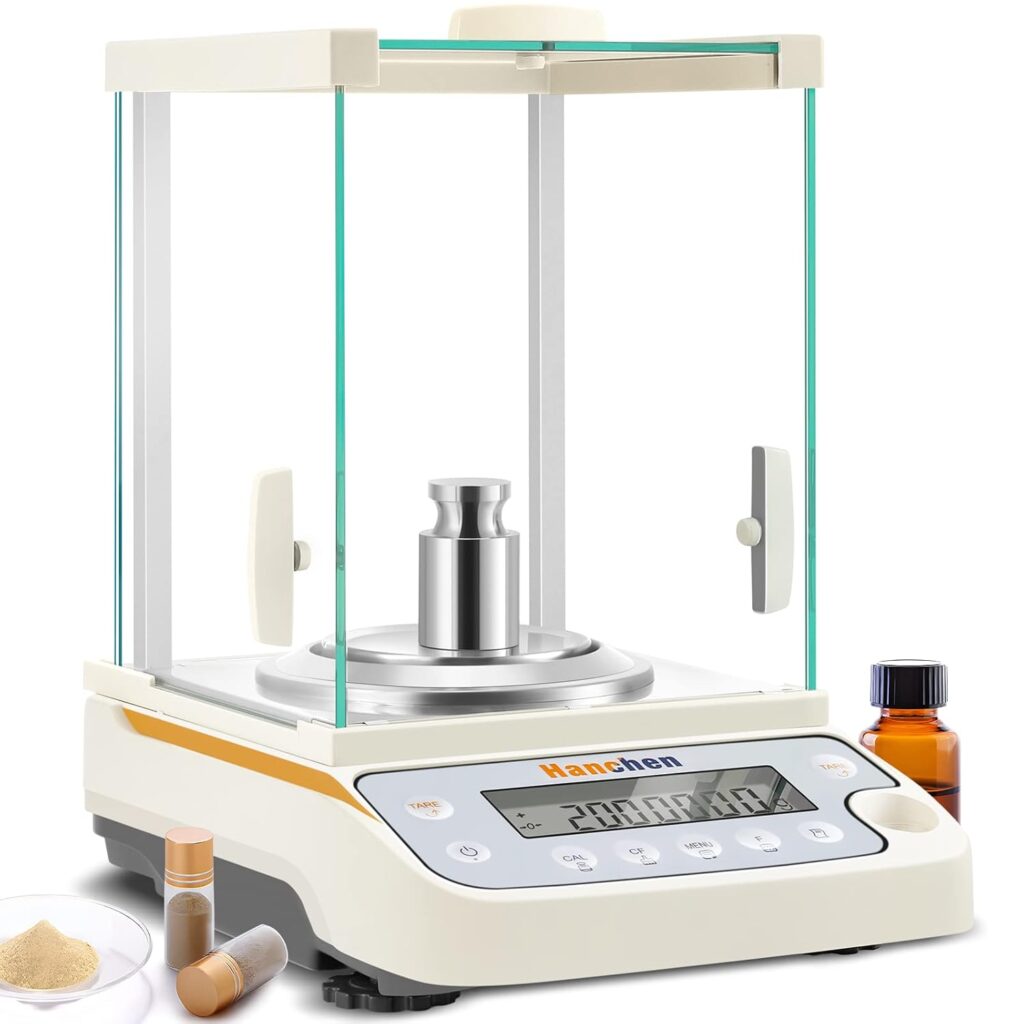
| Hanchen 220g | 0.1 mg (0.0001 g) | 220 g | External | RS232 | Best Ultra-Budget Option | Hanchen 220 g 0.1 mg Analytical Balance on Amazon |
Top Picks: Best Affordable Analytical Balances for University & Small Labs (2026 Reviews)
Below, we review the best affordable analytical balances currently available for university laboratories, teaching labs, and small research facilities. Each budget analytical balance listed here delivers true 0.1 mg readability (0.0001 g precision), reliable repeatability, and essential calibration features — making them suitable for routine analytical workflows without the cost of high-end research systems. Our evaluation focuses on capacity, internal vs. external calibration, long-term stability, and overall value for laboratories seeking dependable analytical balances.
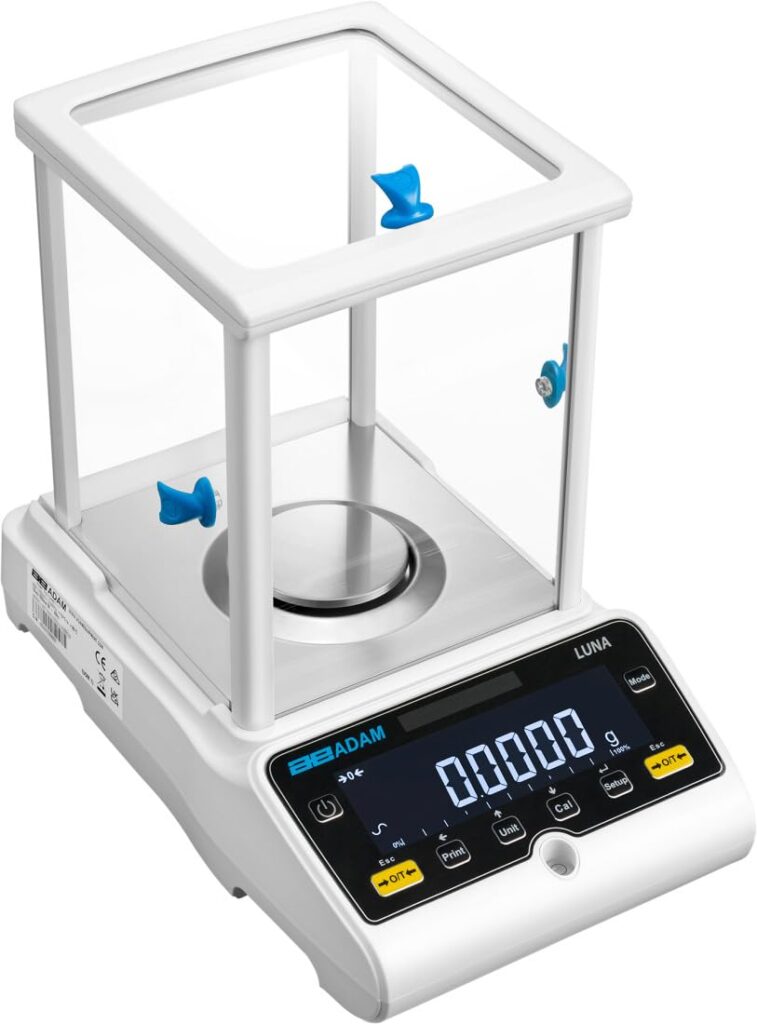
1. Adam Equipment Luna LAB 84e
Positioned firmly within the mid-range of the best affordable analytical balances, the Adam Luna LAB 84e delivers genuine 0.0001 g readability in a professionally engineered platform. It is purpose-built for everyday laboratory precision — offering the reliability, stability, and connectivity expected in university and clinical environments, while remaining significantly more accessible than high-end analytical systems. For labs seeking serious analytical performance without premium-tier pricing, the Luna 84e stands out as a smart, confidence-driven choice.
Key Specifications
- Capacity: 80 g
- Readability: 0.0001 g (0.1 mg)
- Calibration: External calibration
- Repeatability: ±0.0002 g
- Linearity: ±0.0003 g
- Display: Backlit LCD
- Interfaces: USB & RS-232
- Weighing Pan: Grade 304 stainless steel
- Draft Shield: Standard analytical enclosure
Standout Features
- True 0.1 mg analytical precision suitable for laboratory-grade measurements
- UK-engineered design with US-based technical support
- Dual connectivity (USB & RS-232) for data logging and GLP documentation
- Sealed keypad and durable construction for daily lab environments
- Level indicator and adjustable feet for stable setup
Pros
✔ Reliable 0.1 mg readability
✔ Professional laboratory build quality
✔ Trusted weighing equipment manufacturer
✔ Connectivity for lab documentation
✔ Suitable for teaching and research labs
Cons
✖ External calibration only
✖ 80 g capacity may limit larger sample applications
✖ Price varies depending on distributor
Lab Performance Insight
In controlled laboratory environments, the Luna LAB 84e delivers stable and consistent readings appropriate for university chemistry, microbiology, and clinical teaching labs. While it lacks internal motorized calibration, external calibration with certified weights maintains measurement accuracy when performed routinely. Compared to ultra-budget analytical balances, the Luna series offers noticeably improved stability, build quality, and long-term reliability — positioning it as a dependable mid-range affordable option rather than an entry-level marketplace scale.
Best For
- University chemistry laboratories
- Microbiology and clinical teaching labs
- Research groups requiring dependable 0.1 mg precision
- Laboratories seeking professional-grade analytical performance at a moderate price point
🔴🔗 Price: Adam Luna LAB 84e on Amazon .
2. Torbal AGCN120 Analytical Balance
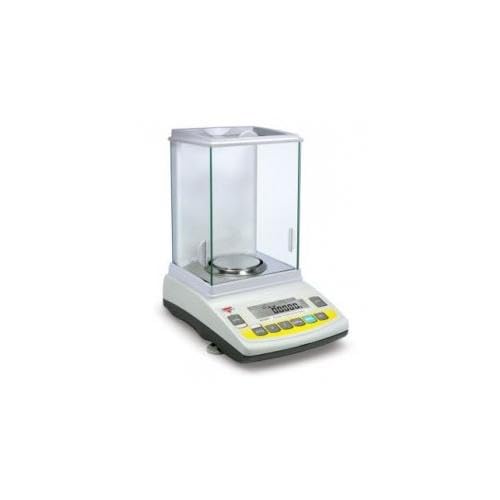
Positioned as a value-driven upgrade within the affordable analytical balance category, the Torbal AGCN120 delivers dependable 0.0001 g readability supported by automatic internal calibration and a stable die-cast metal housing. Its electromagnetic load-cell system enhances repeatability and long-term measurement consistency, making it well suited for laboratories that require reliable analytical weighing without investing in high-end metrology systems.
Key Specifications
- Capacity: 120 g
- Readability: 0.0001 g (0.1 mg)
- Calibration: Automatic Internal Calibration
- Sensor Type: Electromagnetic load cell
- Housing: Rugged die-cast metal
- Display: Large digital LCD
- Interfaces: USB & RS232
- Weighing Modes: 8 modes / 9 units
Standout Features
- Automatic internal calibration maintains measurement accuracy without manual weight adjustment
- Electromagnetic load-cell technology enhances stability and repeatability
- Robust die-cast metal housing improves structural rigidity
- Dual communication ports for laboratory data logging
- Multiple weighing modes suitable for laboratory and jewellery applications
Pros
✔ Internal calibration (major upgrade over external models)
✔ Larger 120 g capacity
✔ Electromagnetic load cell system
✔ Durable metal housing
✔ USB & RS232 connectivity
Cons
✖ Higher price than entry-level affordable models
✖ Brand recognition lower than OHAUS or A&D
✖ May be excessive for basic teaching-only environments
Lab Performance Insight
The Torbal AGCN120 analytical balance positions itself as a strong value-oriented upgrade within the affordable analytical balance segment. The inclusion of automatic internal calibration and an electromagnetic load cell significantly enhances measurement stability compared to external-calibration models. For laboratories performing frequent analytical weighing where recalibration downtime is undesirable, this feature alone justifies its mid-range pricing. While it does not compete directly with premium $3000+ research-grade balances, it provides dependable precision suitable for university labs and non-regulated analytical workflows.
Best For
- University chemistry laboratories requiring internal calibration
- Laboratories with frequent recalibration needs
- Jewellery labs demanding consistent 0.1 mg precision
- Research groups seeking enhanced stability without premium-tier pricing
🔴🔗 pricing: Torbal AGCN120 Analytical Balance on Amazon .
3. U.S. Solid 0.01 mg Semi-Micro Balance 61 g
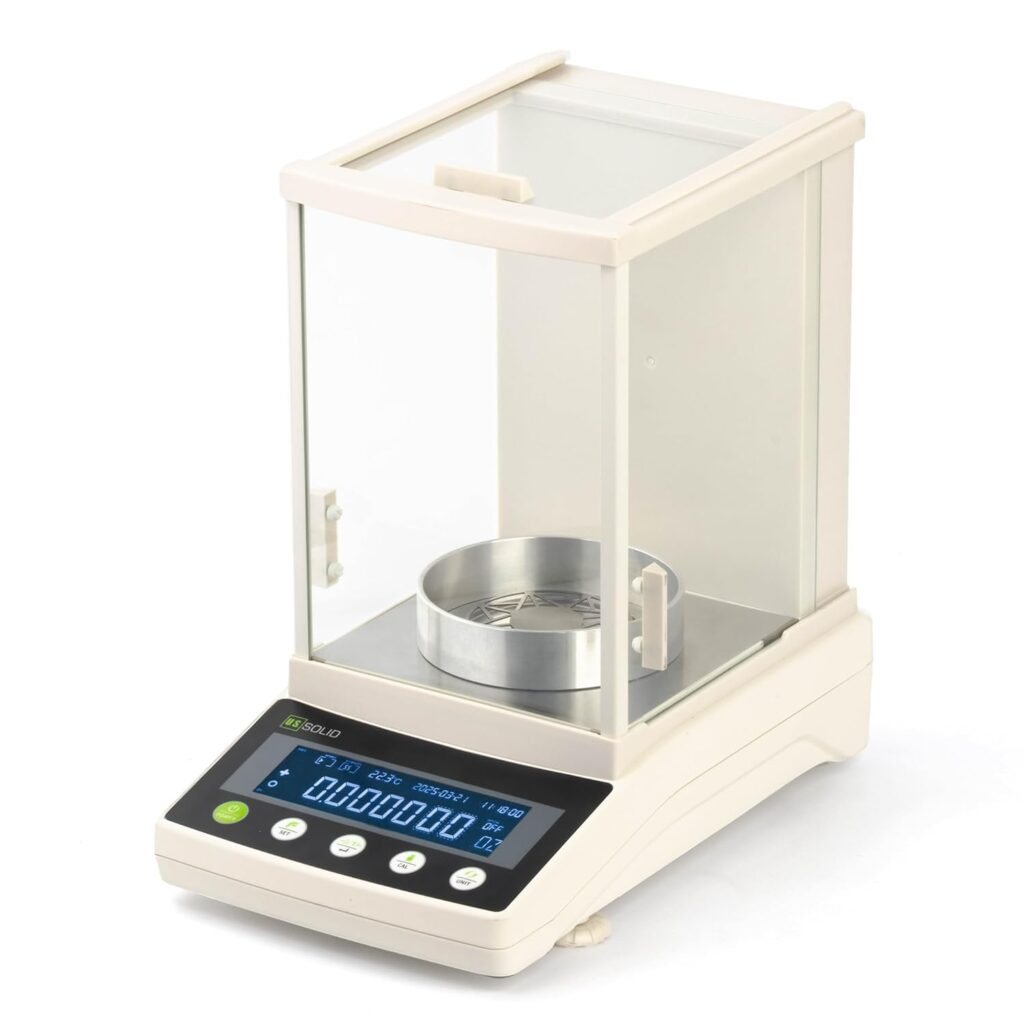
Positioned as an advanced upgrade within the affordable precision category, the U.S. Solid semi-micro balance delivers 0.01 mg readability with automatic calibration and a protective draft shield. It is best suited for laboratories handling micro-samples or high-sensitivity analytical tasks where standard 0.1 mg balances may not provide enough resolution.
Key Specifications
- Capacity: 61 g
- Readability: 0.00001 g (0.01 mg)
- Calibration: Automatic internal + external calibration options
- Display: LCD
- Connectivity: RS232 (GLP-compatible output)
- Draft Shield: Fully enclosed
- Special Functions: Peak Hold, Zero Tracking
Standout Features
- Semi-micro 0.01 mg resolution — 10× finer readability than standard 0.1 mg analytical balances
- Intelligent automatic calibration system compensating for temperature and environmental changes
- Peak Hold and Zero Tracking for dynamic or unstable sample measurements
- RS232 connectivity with GLP-style reporting
- Protective draft shield with airflow-minimizing pan design
Pros
✔ Ultra-high semi-micro precision
✔ Automatic calibration system
✔ Advanced measurement stabilization features
✔ Suitable for highly sensitive analytical tasks
✔ More accessible than premium semi-micro brands
Cons
✖ Higher price than standard 0.1 mg analytical balances
✖ Limited 61 g capacity
✖ Not positioned as a top-tier metrology manufacturer
Lab Performance Insight
The U.S. Solid semi-micro balance represents a technical step above conventional affordable analytical balances. With 0.01 mg readability, it enables the measurement of extremely small mass variations that exceed the requirements of most routine university laboratory workflows. While 0.1 mg analytical balances remain sufficient for general chemistry and teaching applications, semi-micro precision becomes valuable in advanced analytical chemistry, materials research, or micro-quantity formulation work. Compared to premium semi-micro systems exceeding $4000, this model provides a more accessible entry into higher-sensitivity measurement environments — though laboratories requiring strict regulatory compliance should evaluate manufacturer certification standards carefully.
Best For
- Advanced analytical chemistry laboratories
- Micro-sample mass determination
- Research applications requiring enhanced sensitivity
- Laboratories upgrading from standard 0.1 mg analytical balances
🔴🔗 pricee: U.S. Solid 0.01 mg Semi-Micro Balance on Amazon .
Fristaden Lab 210 g × 0.1 mg Analytical Balance – Best Budget Internal Calibration Option
Positioned in the budget tier of today’s best affordable analytical balances, the Fristaden Lab 210 g model delivers 0.0001 g precision with automatic internal calibration and a protective glass draft shield. While it does not compete directly with premium metrology-grade systems, it provides sufficient stability and capacity for teaching labs, pharmacy training environments, and routine laboratory analysis where cost efficiency remains a priority.
Key Specifications
- Capacity: 210 g
- Readability: 0.0001 g (0.1 mg)
- Calibration: Automatic internal calibration
- Display: LCD
- Connectivity: RS-232
- Draft Shield: Glass enclosure
- Material: ABS housing with metal components
Standout Features
- 210 g capacity — higher than many entry-level analytical balances
- Automatic internal calibration system
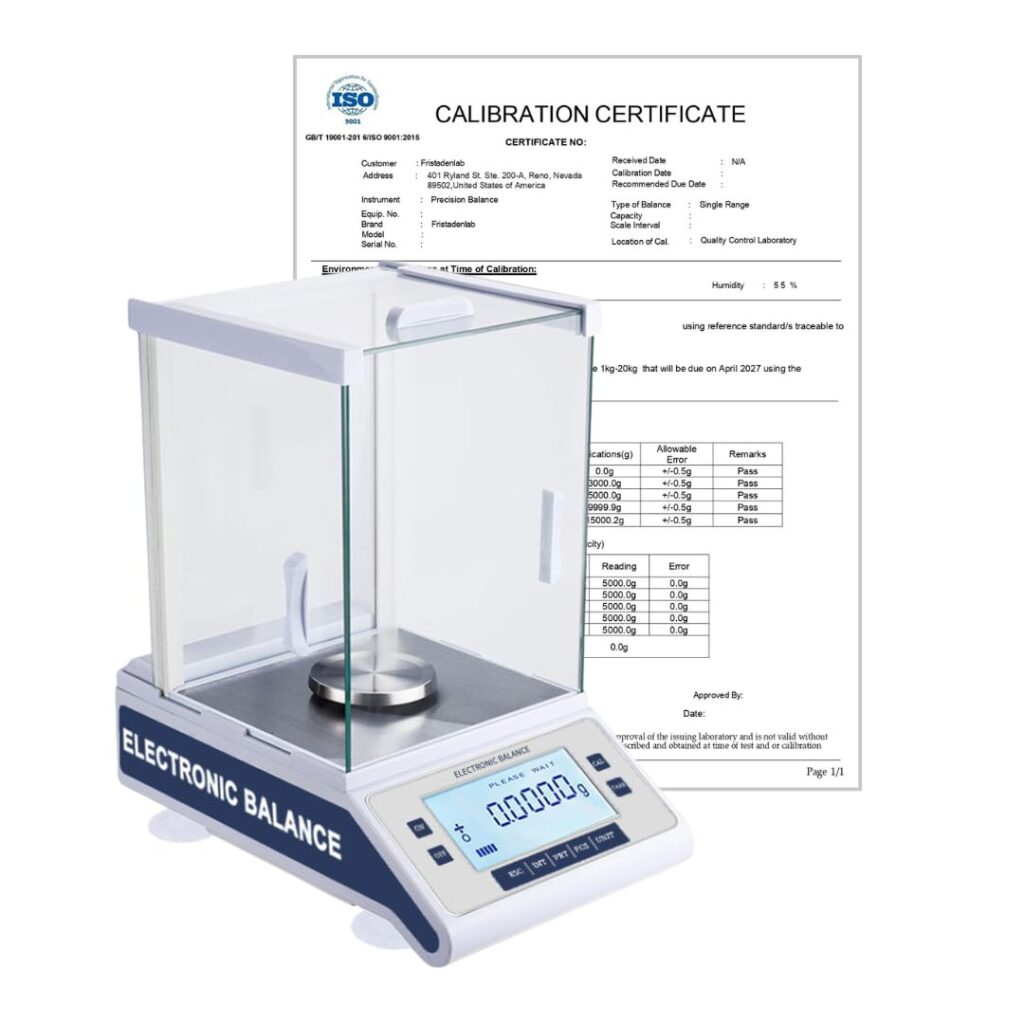
- Pre-calibrated with included calibration certificate
- RS-232 connectivity for data logging
- Adjustable leveling feet for stable setup
Pros
✔ Large 210 g capacity
✔ Internal calibration included
✔ Competitive pricing
✔ Includes calibration certificate
✔ Suitable for teaching and general lab use
Cons
✖ Brand recognition lower than established metrology manufacturers
✖ Housing materials less industrial than premium models
✖ Limited advanced stabilization features
Lab Performance Insight
The Fristaden Lab 210 g analytical balance targets laboratories seeking internal calibration and high capacity at a more accessible price point. While it does not compete directly with high-end research-grade systems, it provides adequate 0.1 mg precision for teaching laboratories, pharmacy training, and routine analytical workflows. Laboratories operating in non-regulated environments may find this model offers a practical balance between functionality and affordability.
Best For
- University teaching laboratories
- Pharmacy and compounding labs
- Budget-conscious research groups
- General-purpose analytical weighing
🔴🔗 price: Fristaden Lab 210 g Analytical Balance on Amazon .
5. Hanchen 220 g × 0.1 mg Analytical Balance – Best Ultra-Budget Option for Teaching Labs
The Hanchen 220 g analytical balance represents the ultra-budget tier within today’s affordable analytical balance market. Offering true 0.1 mg readability at a significantly lower price point than mid-range laboratory brands, it targets teaching labs, jewellery applications, and non-regulated analytical environments. While it does not compete with professional metrology-grade systems in long-term stability or certification standards, it provides accessible analytical precision for routine weighing tasks where cost efficiency is a primary concern.
Key Specifications
- Capacity: 220 g
- Readability: 0.0001 g (0.1 mg)
- Calibration: External calibration
- Display: Backlit LCD
- Connectivity: RS-232 interface
- Draft Shield: Glass enclosure
- Housing: Plastic with metal components
Standout Features
- 220 g capacity at a lower price tier
- Integrated alloy sensor design
- Software temperature compensation
- Reaction time under 5 seconds
- Multiple weighing units (g, mg, ct, oz)
- Draft shield for environmental protection
Pros
✔ Very affordable entry point into 0.1 mg precision
✔ 220 g capacity
✔ RS-232 connectivity
✔ Suitable for teaching and jewellery labs
Cons
✖ External calibration only
✖ Plastic housing construction
✖ Limited documentation for regulated compliance
✖ Not intended for GLP/GMP environments
Lab Performance Insight
The Hanchen 0.1 mg analytical balance is best viewed as a cost-effective teaching and light-duty laboratory solution. In stable environments with proper external calibration weights, it can deliver acceptable analytical precision for routine chemistry exercises, pharmacy training, and jewellery applications. However, laboratories operating under strict compliance requirements or requiring advanced long-term stability should consider higher-tier analytical systems with stronger metrological certification.
Best For
- University teaching laboratories
- Jewellery weighing applications
- Budget-restricted lab environments
- Non-regulated analytical workflows
🔴🔗 price: Hanchen 220 g 0.1 mg Analytical Balance on Amazon .
How to Choose the Best Analytical Balance for Your Laboratory
Choosing the best analytical balance for your laboratory depends on precision requirements, calibration type, capacity, and the regulatory environment in which the balance will operate. While many university and teaching labs can operate effectively with a 0.1 mg analytical balance, advanced research workflows may require semi-micro precision (0.01 mg). Understanding these factors ensures you select an analytical balance that delivers reliable performance without overspending.
1. Determine the Required Precision (0.1 mg vs 0.01 mg)
Most academic laboratories use 0.0001 g (0.1 mg) analytical balances for routine weighing, chemical preparation, and teaching experiments. However, if your work involves micro-sample analysis or high-sensitivity research, a 0.00001 g (0.01 mg) semi-micro balance may be more appropriate. Choosing higher precision than necessary increases cost without improving workflow efficiency.
2. Evaluate Calibration Type: Internal vs External
Analytical balances with automatic internal calibration adjust for temperature fluctuations and environmental changes automatically, improving long-term stability. External calibration models require certified calibration weights and manual adjustment but are often more affordable. For teaching labs and non-regulated environments, external calibration may be sufficient.
3. Consider Maximum Capacity
Capacity determines the largest sample you can weigh accurately. Common analytical balances range from 60 g to 220 g. If your lab handles larger sample containers or compound preparation, selecting a higher capacity model prevents workflow limitations.
4. Assess Laboratory Environment & Stability
Environmental factors such as airflow, vibration, and temperature changes directly impact analytical balance performance. Look for:
- Draft shields
- Level indicators
- Adjustable feet
- Stable housing materials
In high-sensitivity environments, electromagnetic load-cell systems provide improved repeatability.
For laboratories performing broader electrical or material characterization workflows, analytical balances are often used alongside LCR meters and digital multimeters. Integrating complementary laboratory equipment ensures more comprehensive experimental analysis and measurement reliability across multiple testing parameters.
5. Define Regulatory Requirements
If your laboratory operates under GLP, GMP, or pharmaceutical compliance, documentation capabilities and certified calibration traceability become essential. Budget analytical balances are suitable for teaching and non-regulated workflows but may not meet strict validation standards.
By aligning precision level, calibration type, capacity, and laboratory compliance requirements, you can confidently select an analytical balance that matches both performance expectations and financial constraints. Careful evaluation ensures long-term measurement reliability while avoiding unnecessary investment in premium-tier systems.
Many university and research laboratories use analytical balances alongside pH meters and conductivity meters to ensure accurate chemical analysis and experimental consistency. Selecting complementary laboratory equipment helps create a well-integrated analytical workflow.
Conclusion
Choosing the best affordable analytical balance ultimately comes down to aligning precision, calibration type, and capacity with your laboratory’s real-world requirements. While semi-micro models offer ultra-high sensitivity for advanced research, most university and teaching laboratories operate efficiently with a reliable 0.1 mg analytical balance that delivers stable, repeatable performance.
In this guide, we compared affordable analytical balances across multiple performance tiers — from trusted mid-range laboratory brands to budget-friendly options suitable for non-regulated environments. Whether you prioritize internal calibration for convenience, higher capacity for workflow flexibility, or cost-efficiency for teaching applications, selecting the right precision balance ensures accurate measurements without unnecessary overspending.
If you would like to revisit the detailed specifications, calibration features, and laboratory suitability of each model, return to our full analytical balance reviews to compare them side by side before making your final decision.
A carefully selected analytical balance is not just a purchase — it is a long-term investment in measurement accuracy, laboratory efficiency, and scientific reliability.
If you’re building or upgrading a complete lab setup, we also recommend reviewing our comprehensive guide to essential laboratory equipment for physics and chemistry labs to ensure a fully optimized analytical workspace.
Frequently Asked Questions About Affordable Analytical Balances
A 0.1 mg analytical balance (0.0001 g readability) is suitable for most university laboratories, teaching experiments, and routine chemical preparation. A 0.01 mg semi-micro balance (0.00001 g readability) offers ten times higher resolution and is typically used for micro-sample analysis or advanced research requiring extremely high sensitivity.
Some affordable analytical balances include automatic internal calibration, while others require external calibration using certified weights. Internal calibration improves convenience and stability, especially in environments with temperature fluctuations. External calibration models are generally more budget-friendly and suitable for teaching laboratories.
Budget analytical balances can provide reliable 0.1 mg precision for non-regulated laboratory environments, teaching applications, and routine workflows. However, laboratories operating under GLP or GMP compliance may require certified metrology-grade instruments with documented traceability.
Most analytical balances range between 60 g and 220 g capacity. If your laboratory handles small reagent quantities, a lower capacity model may be sufficient. For compound preparation or larger sample containers, selecting a 120 g to 220 g balance offers greater flexibility.
Affordable analytical balances may be used for pharmacy training or non-regulated compounding environments. However, regulated pharmaceutical laboratories typically require validated instruments with documented calibration procedures and compliance certification.
With proper maintenance, regular calibration, and stable environmental conditions, analytical balances can last 5–10 years or more. Higher-quality models with durable housing and electromagnetic load-cell systems generally provide better long-term stability.