
In modern laboratories, maintaining perfectly clean equipment is not just a matter of hygiene it directly affects accuracy, reliability, and experimental outcomes. This is why choosing the best ultrasonic cleaner for laboratory equipment has become essential for research labs, chemistry labs, and scientific facilities.
Unlike manual washing, an ultrasonic cleaner for lab equipment uses high frequency cavitation to remove microscopic contaminants from delicate surfaces, making it ideal for cleaning lab glassware, pipettes, and precision instruments. Whether you are working in a research lab or a teaching laboratory, investing in a professional ultrasonic cleaner for laboratory use can significantly improve cleaning efficiency while reducing the risk of contamination.
In this guide, we’ll explore the best ultrasonic cleaners for laboratory equipment in 2026, including models suitable for lab glassware, scientific instruments, and sensitive components—helping you find the right solution for your specific lab needs.
For a complete setup, explore our guide to essential laboratory equipment for research labs.
Quick Comparison of the Best Ultrasonic Cleaners for Laboratory Equipment
Choosing the best ultrasonic cleaner for laboratory equipment depends on your lab size, cleaning needs, and required features. The comparison table below highlights the top ultrasonic cleaners for lab glassware, scientific instruments, and research applications to help you quickly find the right option for your laboratory.
| Product | Capacity | Frequency | Heater | Best For | Price Range |
|---|---|---|---|---|---|
| Elmasonic P30H ⭐ Best Premium | 0.7 gal (2.5L) | Dual 37/80 kHz | ✅ Yes | Precision lab cleaning & sensitive instruments | |
| Branson CPX-952-116R ⭐ Best for Routine Lab Use | 0.5 gal (1.9L) | 40 kHz | ❌ No | Daily glassware & instrument cleaning | |
| Sper Scientific 100007 ⭐ Best Mid-Range Option | 2.5L | 35 kHz | ✅ Yes | Small research labs & glassware cleaning | |
| VEVOR 15L Ultrasonic Cleaner ⭐ Best Large Capacity | 15L | 40 kHz | ✅ Yes | Batch cleaning & industrial lab use | |
| Kendal 2L Ultrasonic Cleaner ⭐ Best Budget Pick | 2L | 40–42 kHz | ✅ Yes | Budget-friendly routine lab cleaning |
In-Depth Reviews of the Best Ultrasonic Cleaners for Laboratory Equipment
Choosing the best ultrasonic cleaner for laboratory equipment depends on your lab’s needs-from cleaning glassware to delicate instruments. A reliable ultrasonic cleaner for lab equipment improves efficiency, reduces contamination, and ensures consistent results.
Below, we review the best ultrasonic cleaners for laboratory use in 2026, including options with heaters, compact designs, and professional-grade performance for research labs.
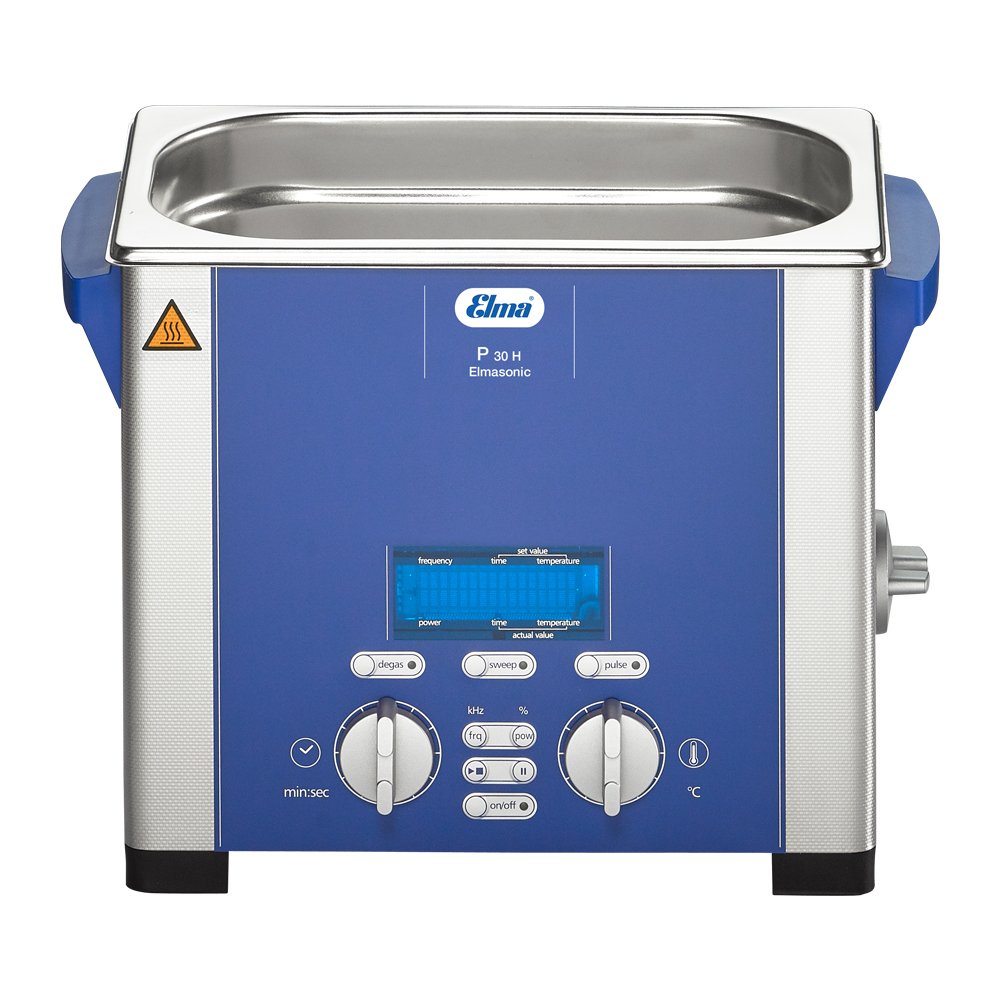
1. Elmasonic P30H Dual Frequency Ultrasonic Cleaner (0.7 Gallon)
A premium, high-performance ultrasonic cleaner designed for precise laboratory and industrial cleaning tasks.
Key Features
- Dual Frequency: 37 kHz / 80 kHz (flexible cleaning modes)
- Tank Capacity: 0.7 gallon (~2.5 L)
- Adjustable Ultrasonic Power
- Heating Function (for enhanced cleaning efficiency)
- Multiple Modes: mixing, standard cleaning, intensive cleaning, degassing
- Digital LED Display & User-Friendly Control Panel
- Built-in Drain for easy liquid removal
- Professional-grade stainless steel construction
Pros
- Dual-frequency system allows both gentle and intensive cleaning
- Excellent for delicate lab instruments and stubborn residues
- High build quality suitable for long-term laboratory use
- Advanced modes like degassing improve cleaning performance
- Easy operation with clear digital interface
Cons
- Expensive compared to entry-level ultrasonic cleaners
- Smaller tank capacity may not suit large-volume labs
- Overpowered for basic or occasional cleaning tasks
Lab Performance Insights
The Elmasonic P30H stands out as one of the best ultrasonic cleaners for laboratory equipment when precision and control are critical. The dual-frequency system is particularly valuable in lab environments:
- 37 kHz delivers strong cavitation for removing stubborn chemical residues from glassware and metal parts
- 80 kHz provides gentle cleaning for delicate instruments like sensors, lenses, and fine components
The inclusion of degassing mode ensures optimal cavitation efficiency, especially when using fresh cleaning solutions—something many basic units lack. In real lab scenarios, this results in more consistent and uniform cleaning, particularly for pipettes, beakers, and precision tools.
While the 0.7-gallon tank is relatively compact, it is ideal for targeted, high-precision cleaning tasks rather than bulk processing. Combined with the heating function, it significantly improves removal of organic and chemical contaminants.
Best For
- Research laboratories requiring high-precision cleaning
- Cleaning delicate lab instruments and sensitive components
- Labs dealing with both heavy contamination and fine cleaning tasks
- Professionals looking for a top-tier ultrasonic cleaner for lab equipment
🔴🔗 Price: Check price on Amazon
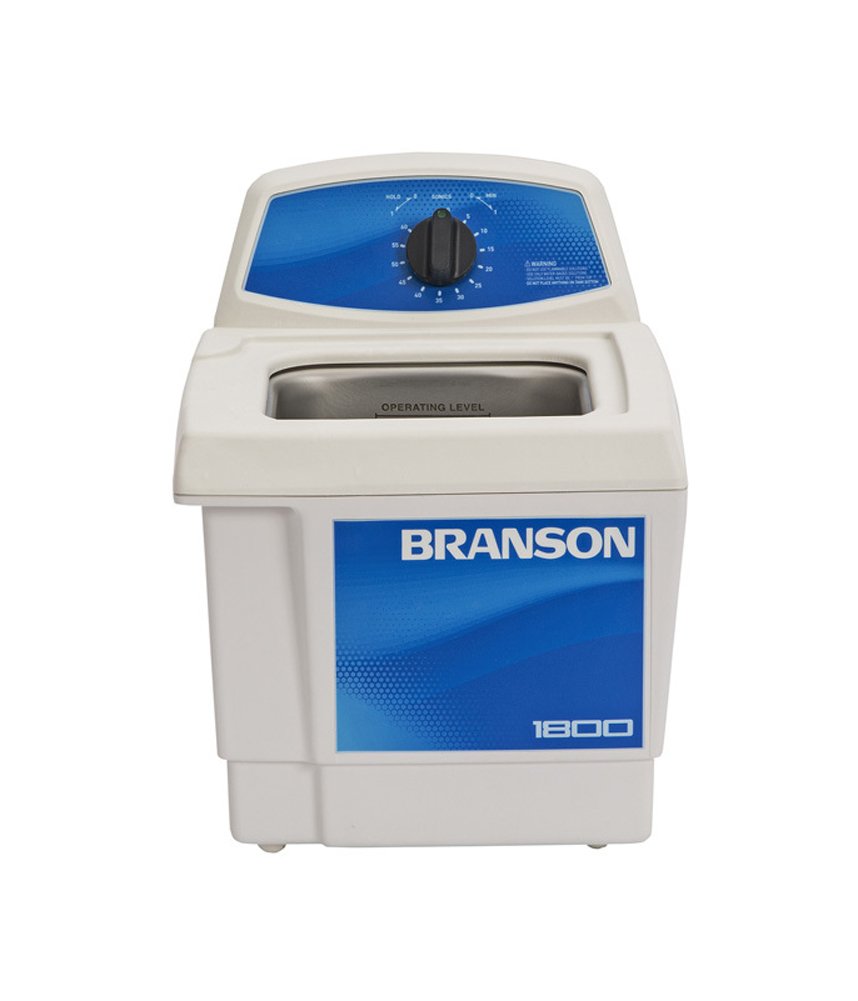
2. Branson CPX-952-116R Series M Mechanical Ultrasonic Cleaning Bath
(0.5 Gallon)
A reliable, no-frills ultrasonic cleaner built for consistent daily lab cleaning with simple mechanical control.
Key Features
- Ultrasonic Frequency: 40 kHz (standard lab cleaning)
- Tank Capacity: 0.5 gallon (~1.9 L)
- 60-Minute Mechanical Timer (continuous mode available)
- Industrial-Grade Transducers
- Simple Tower Control Panel
- Built-in Pour Drain
- Durable, compact design for bench-top use
Pros
- Trusted Branson Ultrasonics brand with strong lab reputation
- Simple mechanical operation (no learning curve)
- Reliable 40 kHz cleaning for routine lab tasks
- Continuous mode useful for longer cleaning cycles
- Compact and space-efficient
Cons
- No heating function (limits cleaning performance for tough residues)
- Single frequency (less versatile than dual-frequency models)
- Basic interface (no digital display or advanced modes)
- Smaller tank capacity
Lab Performance Insights
The Branson CPX-952-116R is a solid choice for labs that need a dependable ultrasonic cleaner for lab equipment without unnecessary complexity. Operating at 40 kHz, it delivers consistent cavitation suitable for everyday cleaning tasks such as beakers, test tubes, and small lab tools.
However, compared to more advanced models, the lack of heating and adjustable power means it may struggle with stubborn chemical residues or heavy contamination. This makes it better suited for routine maintenance cleaning rather than deep or precision-critical applications.
Its mechanical timer and continuous operation mode are particularly useful in busy labs where simplicity and reliability matter more than advanced features. For teaching labs or standard workflows, it performs reliably as a laboratory ultrasonic cleaner for basic cleaning needs.
Best For
- Teaching laboratories and university labs
- Routine cleaning of lab glassware and tools
- Users who prefer simple, mechanical operation
- Labs looking for a reliable mid-range ultrasonic cleaner for laboratory use
🔴🔗 Price: Check price on Amazon
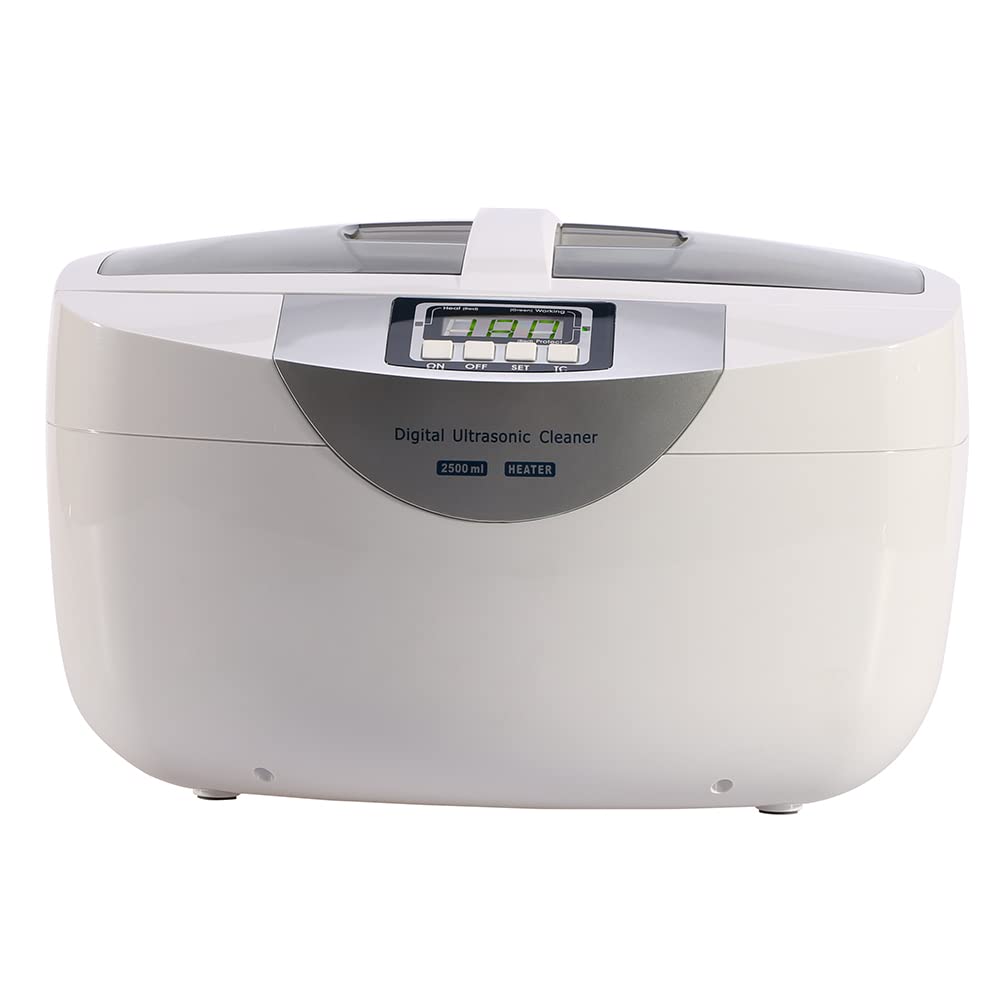
3. Sper Scientific 100007 Advanced Ultrasonic Cleaner with Heater (2.5 Liters)
A versatile, mid-range ultrasonic cleaner that balances capacity, heating, and digital control for everyday laboratory use.
Key Features
- Tank Capacity: 2.5 liters (large stainless steel tank)
- Ultrasonic Frequency: 35 kHz
- Built-in Ceramic Heater (up to 65°C)
- Digital LED Display with 5 Timer Settings (90–480 sec)
- High-powered transducers for effective cleaning
- Includes dipping basket for small instruments
- Cooling fan & automatic heater shutoff
Pros
- Larger tank suitable for multiple lab items at once
- Heating function significantly improves cleaning efficiency
- Digital controls allow precise and repeatable cleaning cycles
- Good balance between price and performance
- Quiet operation compared to industrial models
Cons
- Single frequency (less flexible than dual-frequency units)
- Build quality not as robust as premium lab-grade systems
- Timer range may be short for extended cleaning needs
- Not ideal for heavy industrial contamination
Lab Performance Insights
The Sper Scientific 100007 is a practical choice for labs seeking a cost-effective ultrasonic cleaner for laboratory equipment with essential features like heating and digital control. The 35 kHz frequency provides strong cavitation, making it effective for removing grease, dust, and light chemical residues from lab glassware and instruments.
The integrated ceramic heater (up to 65°C) is a major advantage, as it enhances the breakdown of contaminants—especially useful when cleaning beakers, flasks, and metal tools. In real lab workflows, this results in faster and more efficient cleaning compared to non-heated models.
With its 2.5-liter capacity, it handles small batch cleaning comfortably, making it suitable for routine lab operations. While it may not match the precision or durability of high-end systems, it performs reliably as a digital ultrasonic cleaner for lab equipment in teaching labs, small research setups, or budget-conscious environments.
Best For
- Small to mid-size laboratories
- Cleaning lab glassware, dental tools, and general instruments
- Users looking for an ultrasonic cleaner with heater for lab use
- Budget-conscious labs needing solid performance without premium cost
🔴🔗 Price: Check price on Amazon
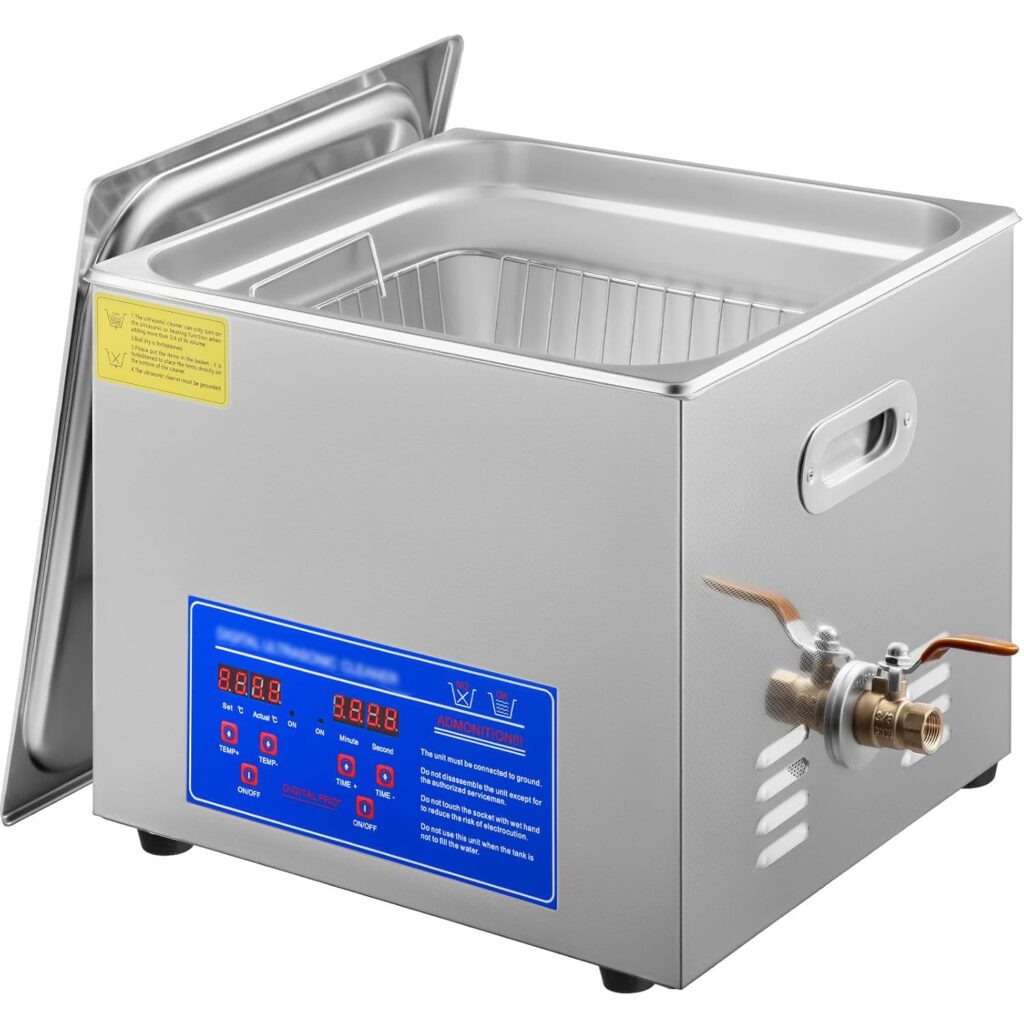
4. VEVOR 15L Professional Ultrasonic Cleaner with Heater (40 kHz)
A high-capacity, budget-friendly ultrasonic cleaner built for bulk cleaning and heavy-duty laboratory or industrial use.
Key Features
- Tank Capacity: 15 liters (large-scale cleaning)
- Ultrasonic Frequency: 40 kHz
- Ultrasonic Power: 360W (6 × 60W transducers)
- Heating Power: 400W (up to 80°C)
- Digital Timer: 0–30 minutes
- Digital Temperature Control: 0–80°C
- 304 Stainless Steel Tank (durable industrial build)
- Includes cleaning basket for small parts
Pros
- Large capacity ideal for cleaning multiple items at once
- Strong ultrasonic and heating power for deep cleaning
- Excellent value for money compared to similar-size units
- Digital control panel for easy operation
- Durable stainless steel construction
Cons
- Bulky and requires significant bench space
- Less precise for delicate or sensitive lab instruments
- Build quality not as refined as premium lab brands
- Noise level higher due to powerful operation
Lab Performance Insights
The VEVOR 15L stands out as a high-capacity ultrasonic cleaner for laboratory equipment where volume and power matter more than precision. Operating at 40 kHz with 360W ultrasonic power, it delivers strong cavitation suitable for removing grease, oils, and heavy contamination from metal parts, tools, and durable lab equipment.
The 400W heating system (up to 80°C) significantly boosts cleaning performance, especially when dealing with stubborn residues or industrial-level contamination. In practical lab environments, this unit excels in batch cleaning, allowing multiple glassware items, metal components, or larger instruments to be cleaned simultaneously.
However, due to its high power and single-frequency operation, it is less suitable for very delicate instruments that require gentle cleaning. Instead, it performs best as an industrial ultrasonic cleaner for laboratory use, particularly in engineering labs, materials labs, or workshops connected to research environments.
Best For
- Large laboratories and high-throughput environments
- Cleaning metal parts, tools, and durable lab equipment
- Batch cleaning of glassware and components
- Users needing a large ultrasonic cleaner for laboratory equipment at an affordable price
🔴🔗 Price: Check price on Amazon
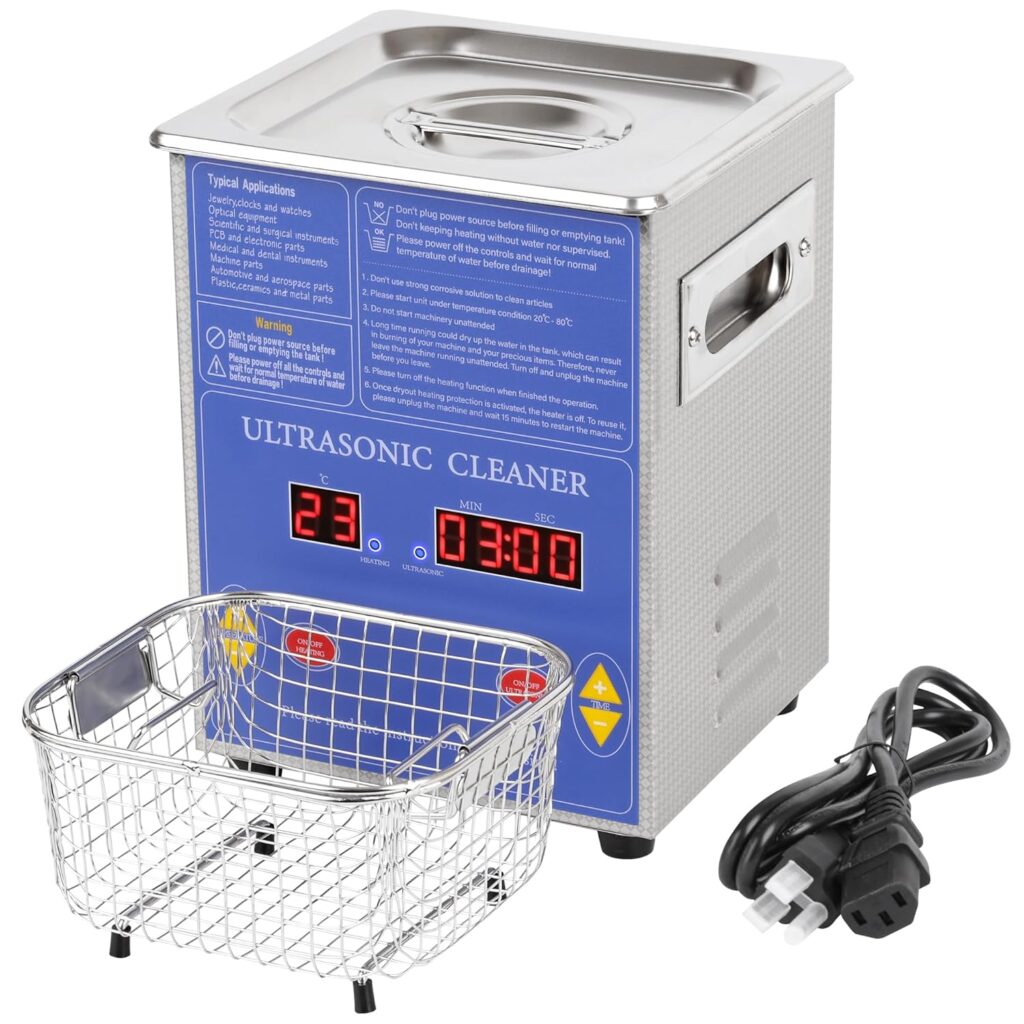
5. Kendal Commercial Grade 2L Ultrasonic Cleaner (40–42 kHz)
A budget-friendly ultrasonic cleaner with heating and extended timer range, ideal for routine lab cleaning tasks.
Key Features
- Tank Capacity: 2 liters
- Ultrasonic Frequency: ~40–42 kHz
- Ultrasonic Power: 120W
- Heating Power: 150W (up to 80°C)
- Digital Timer: 1–99 minutes (wide range)
- Digital Temperature Control (20–80°C)
- Full Stainless Steel Construction (tank, body, lid, basket)
- Includes mesh basket for small components
Pros
- Affordable price with solid feature set
- Long timer range (up to 99 minutes) for deep cleaning cycles
- Heating function improves removal of oils and residues
- Compact yet practical tank for small lab items
- Durable stainless steel build resistant to chemicals
Cons
- Lower ultrasonic power compared to high-end models
- Not suitable for heavy industrial contamination
- Build quality below premium laboratory brands
- Slightly less consistent cavitation for precision cleaning
- Lab Performance Insights
The Kendal 2L is a practical option for labs looking for a low-cost ultrasonic cleaner for laboratory equipment with essential features like heating and digital control. Operating at around 40–42 kHz, it provides adequate cavitation for everyday cleaning tasks such as removing oils, dust, and light residues from lab glassware and small instruments.
The 150W heater is particularly useful in improving cleaning efficiency when dealing with organic residues or waxy contaminants. In real lab use, the extended timer range (up to 99 minutes) allows for longer soaking and cleaning cycles, which can compensate for its lower ultrasonic power.
While it may not deliver the precision or intensity required for advanced research environments, it performs reliably as a compact ultrasonic cleaner for lab instruments, especially in teaching labs or light-duty applications.
Best For
- Budget-conscious laboratories
- Light-duty cleaning of lab glassware and small instruments
- Users needing longer cleaning cycles (up to 99 minutes)
- Small labs looking for an affordable ultrasonic cleaner with heater for lab use
🔴🔗 Price: Check price on Amazon
How to Choose the Best Ultrasonic Cleaner for Laboratory Equipment
Choosing the right ultrasonic cleaner for lab equipment involves more than just price or tank size. Factors such as ultrasonic frequency, heating capability, cleaning power, and overall build quality can significantly affect cleaning performance and compatibility with laboratory instruments. Below are the key features to consider before choosing an ultrasonic cleaner for your laboratory.
Tank Capacity
Tank capacity determines how many items you can clean at once. Smaller ultrasonic cleaners are suitable for routine cleaning of lab glassware and small instruments, while larger tanks are better for batch cleaning and industrial laboratory applications.
Ultrasonic Frequency
Ultrasonic frequency directly affects cleaning intensity. Lower frequencies provide stronger cleaning power for heavy contamination, while higher frequencies are safer for delicate laboratory instruments and precision components.
Higher-frequency ultrasonic cleaners are ideal for cleaning sensitive scientific instruments without damaging delicate components.
Heating Function
A built-in heater improves cleaning efficiency by helping dissolve oils, grease, and chemical residues more effectively. For most laboratory applications, an ultrasonic cleaner with heater can significantly enhance cleaning performance.
For laboratories that frequently work with heated cleaning processes and temperature-sensitive applications, using proper <a href=”YOUR-WATER-BATH-LINK”>laboratory water baths</a> alongside ultrasonic cleaning systems can improve overall workflow efficiency.
For temperature-based laboratory applications, many labs also rely on laboratory water baths alongside ultrasonic cleaning systems.
Digital Controls & Timer
Digital timers and temperature controls allow more precise and repeatable cleaning cycles. Adjustable settings are especially useful when cleaning sensitive scientific instruments or different types of laboratory equipment.
Build Quality
Stainless steel construction is preferred for durability and resistance to chemicals commonly used in laboratory environments. High-quality ultrasonic cleaners also provide more stable long-term performance.
Noise Level & Maintenance
Some high-powered ultrasonic cleaners can generate noticeable noise during operation. Choosing a model with efficient cooling and easy maintenance features can improve usability in busy laboratory settings.
Conclusion
Choosing the best ultrasonic cleaner for laboratory equipment ultimately depends on your lab’s workflow, cleaning requirements, and budget. For precision cleaning and advanced laboratory applications, the Elmasonic P30H stands out with its dual-frequency technology and professional-grade performance. Meanwhile, larger systems like the VEVOR 15L are ideal for high-volume and industrial-style cleaning tasks, while budget-friendly options such as the Kendal 2L provide reliable everyday performance for smaller labs.
Whether you need an ultrasonic cleaner for lab glassware, sensitive scientific instruments, or general laboratory maintenance, investing in the right ultrasonic cleaning system can improve cleaning efficiency, reduce contamination risks, and help maintain accurate experimental results. By comparing features such as frequency, heating capability, tank size, and build quality, you can confidently choose the best ultrasonic cleaner for your laboratory needs.
Ultrasonic cleaning is especially useful for laboratories working with precision analytical balances and other sensitive measuring instruments.
Frequently Asked Questions About Ultrasonic Cleaners for Laboratory Equipment
The best ultrasonic cleaner for laboratory equipment depends on your cleaning needs, laboratory size, and required features. Premium models like the Elmasonic P30H offer advanced dual-frequency cleaning for precision instruments, while larger systems such as the VEVOR 15L are better for bulk cleaning applications.
Yes, ultrasonic cleaners are generally safe for laboratory glassware when used with appropriate cleaning settings and solutions. Higher-frequency ultrasonic cleaners are especially suitable for delicate glassware and sensitive laboratory instruments.
In many cases, yes. A built-in heater improves the removal of oils, grease, and chemical residues, making ultrasonic cleaning more efficient for laboratory equipment and scientific instruments.
Lower frequencies around 35–40 kHz provide stronger cleaning for heavy contamination, while higher frequencies such as 80 kHz are better for delicate laboratory components and precision cleaning tasks.
Cleaning frequency depends on the type of laboratory work and contamination level. Research labs and chemistry labs typically clean glassware and instruments after each use to maintain accuracy and prevent contamination.
When used correctly, ultrasonic cleaners are generally safe for most laboratory instruments. However, delicate components should be cleaned using appropriate frequency settings and compatible cleaning solutions.